Balochistan Textbook Board Achieves Historic Milestone, Saves Rs125 Billion Through Efficient Textbook Printing and Distribution
**Quetta (Daily Qudrat Quetta):**
The Balochistan Secondary Education Department has achieved a historic milestone in the printing and distribution of textbooks for the academic year 2026, ensuring timely delivery while generating massive savings for the provincial exchequer. More than 85 percent of textbooks printed by the Balochistan Textbook Board have been successfully completed and transported from Lahore to Quetta and, as in previous years, will be distributed free of cost to students across all districts before the start of the academic session.
By ensuring complete transparency in the printing tender process, the provincial government has achieved savings of approximately Rs125 billion. These initiatives were implemented in line with the vision of Chief Minister Balochistan Mir Sarfraz Khan Bugti, Provincial Education Minister Raheela Hameed Khan Durrani, and under the clear directives of Education Secretary Asfandyar Khan.
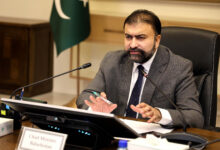

Speaking during a review meeting on textbooks for the academic year 2026, Chairman Balochistan Textbook Board Dr Gulab Khan Khilji said that, compared to previous years, the cost of textbook publication has been significantly reduced. He added that the decades-old curriculum dating back to the 1970s has been completely replaced with a modern curriculum aligned with contemporary educational needs. He termed the achievement a result of the dedication, professionalism, and hard work of the board’s officers and staff.
According to departmental reports, during the academic year 2023–24, a total of 9.25 million textbooks were printed at a cost of Rs2.12 billion. In 2024–25, 9.31 million textbooks were published at a cost of Rs1.086 billion. In contrast, for 2025–26, 11.5 million textbooks have been prepared at a cost of only Rs883.1 million, reflecting extraordinary savings.
Data further shows that textbook printing this year was completed at a cost of Rs0.65 per page, the lowest in the country. By comparison, the same cost in Khyber Pakhtunkhwa stood at Rs0.79 per page.
The School Directorate reported that demand for textbooks increased by 2.2 million copies this year compared to the previous year, primarily due to the restoration of nearly 4,000 closed schools and the recruitment of more than 10,000 new teachers by the provincial government.
Under the National Curriculum of Pakistan 2022–23, new textbooks have been prepared from primary to intermediate levels. The curriculum includes Nazra and translation of the Holy Quran, computer education, and supplementary learning material on environment and climate change, health and physical education, citizenship, and ethics.
All textbooks were evaluated through internal and provincial review committees in accordance with standard operating procedures. Additionally, on the instructions of the Education Secretary, a two-tier review mechanism was introduced to further ensure quality.
The Education Department stated that English-medium textbooks will be given priority in the coming year, and to further improve quality, bleach card paper will be used instead of conventional board paper. Unnecessary content has also been reduced to ensure timely completion of the annual syllabus without placing an additional academic burden on students.
Officials reaffirmed that the transparent, low-cost, and high-quality textbook production model will continue in the future.