PkMAP Alleges ‘Hybrid Regime’ in Pakistan, Urges Pashtun Land Not Be Used for War Purposes
**Quetta** – The provincial executive committee of Pashtunkhwa National Awami Party (PkMAP) has alleged that a permanent “hybrid system” has been imposed in the country, weakening democratic and constitutional institutions, and called for Pashtun areas not to be used for military objectives.
The meeting was held in Sariab, Quetta, at the residence of Malik Asif Khan Kasi and was chaired by the party’s provincial president, Nasrullah Khan Zarey. Senior leaders, including Senior Deputy Chairman and former senator Raza Muhammad Raza, Senior Secretary Syed Abdul Qadir Agha Advocate, Central Information Secretary Muhammad Isa Roshan, Central Secretary Dr. Bayazid Roshan, and Central Secretary Allah Noor Khan, attended the session.
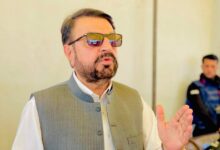
The meeting began with the recitation of the Holy Quran, followed by a detailed review of the party’s previous performance. Participants expressed satisfaction with past activities and made key decisions regarding the future course of action.
Addressing the gathering, party leaders said that PkMAP represents the Pashtun nation and remains committed to the vision of its predecessors, pledging to make every sacrifice for Pashtun national autonomy. They stated that democratic and constitutional institutions in Pakistan have been weakened under what they described as a “hybrid system.”
The leaders also criticized recent constitutional amendments, claiming they have affected the spirit of the Constitution and placed the justice system under severe pressure. They further alleged that the Prevention of Electronic Crimes Act (PECA) has curtailed press freedom, calling it contrary to democratic values.
Reaffirming their stance, party representatives said PkMAP supports the right to governance and ownership for all marginalized nationalities, including Pashtuns, Baloch, Sindhis, and Seraikis. They emphasized their commitment to peaceful and democratic struggle through constitutional and political means.
The party urged all sides to avoid turning the region into a battleground and specifically called for Pashtunkhwa’s land—particularly southern Pashtun areas including Quetta—not to be used for war purposes.
Commenting on the situation in Afghanistan, leaders expressed concern over human rights conditions, especially restrictions on women’s rights and education. They called for the convening of a representative Loya Jirga in Afghanistan, the formation of a new constitution, and the holding of free and transparent elections to transfer power to elected representatives and establish a genuine democratic system.
The meeting concluded with a renewed commitment to strengthen and organize the party’s national and democratic struggle in the coming days.