Lashkari Raisani Declares Support for Youth Turning to Armed Struggle After Parliamentary Failure in Balochistan
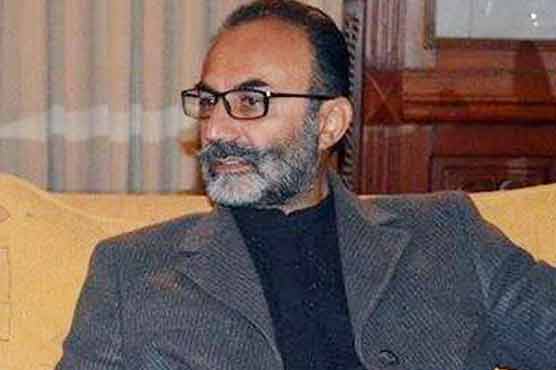
Quetta: Senior politician and former senator Nawabzada Haji Mir Lashkari Khan Raisani has openly expressed sympathy for the youth who have taken to the mountains in Balochistan, claiming that parliamentary democracy has failed to secure the province’s constitutional and human rights. Speaking at a joint press conference with former Prime Minister Shahid Khaqan Abbasi at Sarawan House in Quetta on Thursday, Raisani strongly criticized the recently passed Balochistan Mines and Minerals Act 2025, calling it unconstitutional and a violation of the 18th Amendment.
Raisani accused the establishment of turning Balochistan’s politics into a joke, stating that people from other provinces and even Afghanistan were brought in through rigged elections to deprive the local population of proper representation. “If we cannot secure our rights through democratic struggle, then those youth who have gone to the mountains for their rights will naturally receive public sympathy,” he said.
He warned that the controversial Mines and Minerals Act, which he says hands over Balochistan’s natural resources to the federal government, would be repealed whenever the opportunity arises. Raisani emphasized that the agreement between Muhammad Ali Jinnah and the Khan of Kalat gave Balochistan autonomy over its resources, a promise now being broken by both the government and the opposition through the joint passage of the Act.
Raisani further criticized the sale of Balochistan’s vast mineral wealth, including the $600 billion Reko Diq project, to foreign companies by what he called a non-representative government. “Roads are being built with charity money after selling off our resources,” he added, highlighting the disparity between development in Balochistan and other provinces like Punjab.
Former KP Chief Minister and Governor Sardar Mehtab also spoke at the event, condemning the illegal detention of Baloch women and political activists. He called for their immediate release, arguing that holding individuals without charges or trials goes against both legal norms and basic human decency.