Some Tropical Trees Benefit from Lightning Strikes, Reveals New U.S. Study
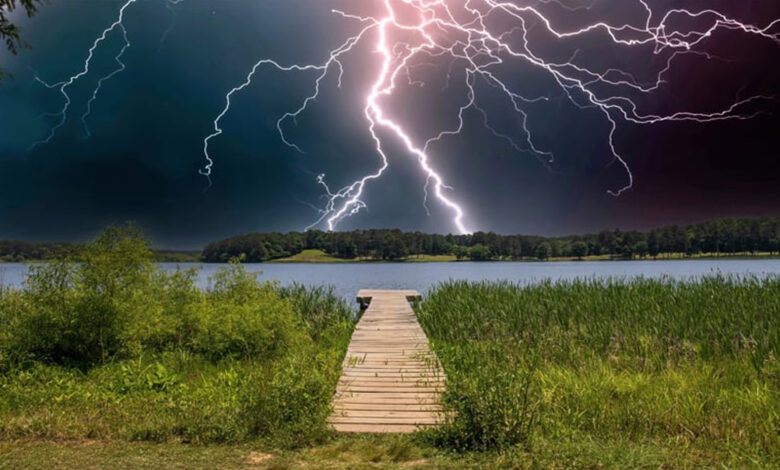
In a surprising scientific discovery, a recent American study has revealed that certain trees in hot and humid tropical forests not only survive lightning strikes but may actually benefit from them.
The study, published in the journal *New Phytologist*, was conducted by a multidisciplinary U.S. research team in collaboration with the Smithsonian Tropical Research Institute. It challenges common assumptions about the destructive nature of lightning, highlighting that while lightning can indeed be deadly and destructive, some trees seem to use it to their advantage.


According to the research, some large tropical trees have evolved to attract lightning strikes strategically. By growing taller and expanding their canopies, these trees increase the likelihood of being struck — and benefitting from it.
The study was based on real-time data from a forest monitored by the Smithsonian, where a lightning detection system recorded 94 strikes across 93 individual trees. Researchers observed these trees over 2 to 6 years using field surveys and drones, assessing factors such as survival, trunk condition, vine colonization, and the death of surrounding vegetation.
One notable species, the **Tonka bean tree**, was highlighted as a potential “lightning winner.” These trees can withstand strikes and gain a competitive edge when nearby trees or parasitic vines are damaged or destroyed by the lightning, reducing competition for resources like sunlight, water, and nutrients.
The study also noted a significant increase in seed production in trees that survived lightning strikes — a phenomenon likened to a kind of ecological “shock therapy.”
While it is well known that millions of trees are lost to lightning every year, this research reveals that some large tropical species not only resist damage but may thrive as a result of their electrifying encounters.