The Fascinating World of Octopuses: Nature’s Genius of the Sea
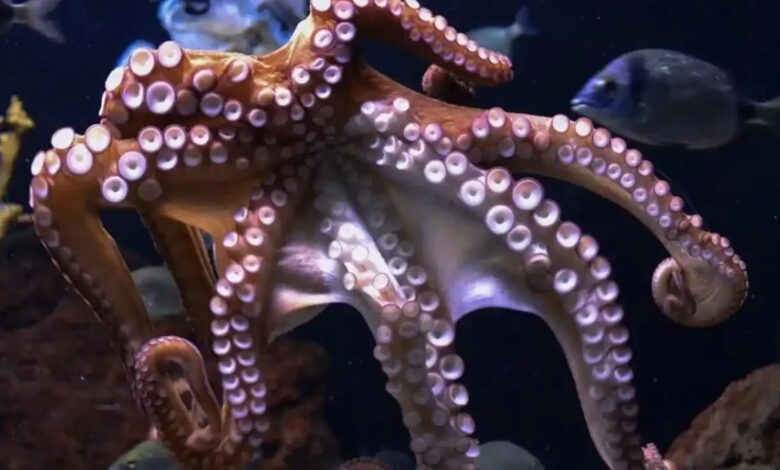
When discussing the mysterious and awe-inspiring creatures of the ocean, the octopus holds a prominent place. Known for its intelligence, agility, and enigmatic nature, the octopus has been baffling humans for centuries with its unique ways and extraordinary abilities.
Did you know that an octopus has three hearts? Two hearts pump blood to the gills, where it absorbs oxygen, while the third heart pumps the oxygenated blood to the rest of the body. Even more astonishing, its blood is blue due to the presence of *hemocyanin*, which contains copper instead of iron.


The octopus is regarded as the most intelligent animal in the ocean. Its problem-solving abilities, escape tactics, and ability to avoid predators make it a master of survival. It can even open a jar! Researchers once locked an octopus inside a jar with its favorite prey (a crab), and the octopus, using its remarkable intellect, unscrewed the lid, retrieved the crab, and escaped.
Its extraordinary intelligence doesn’t stop there. The octopus is capable of learning through trial and error and can remember specific movements or patterns to solve problems. For instance, it can remember how to open a particular box to access food, and it can repeat the same actions when faced with a similar situation in the future.
One of the most amazing abilities of the octopus is its camouflage. It can change the color and texture of its skin at incredible speeds to blend in with its surroundings, becoming almost invisible to predators or prey. This remarkable ability, known as *camouflage*, makes it one of the ocean’s most elusive creatures.
Even more surprising is the fact that the octopus’s arms are independently controlled. Each arm has its own neural network, meaning the arms can move and make decisions without the input of the central brain. At times, the arms can even operate autonomously!
In terms of defense, the octopus has a unique method of escaping danger. When threatened, it releases a dark, ink-like substance that creates a smoky barrier, confusing predators while it makes a swift escape. You could say it throws dust in the predator’s eyes and disappears into the ocean’s depths.
However, despite its remarkable abilities, the life span of an octopus is surprisingly short. Some species live only six months, while larger ones, like the Giant Pacific Octopus, can live up to three to five years. Male octopuses typically die a few weeks after mating, while the female sacrifices herself, guarding her eggs, refusing food, and often dying after the eggs hatch due to exhaustion and hunger.
What makes the octopus even more fascinating is the absence of bones in its body. This allows it to squeeze through tiny spaces and narrow openings with ease. If its head can fit through a hole, the rest of its body can follow.
The octopus is truly one of nature’s most astonishing creations, blending wonder, intelligence, and imagination. The more we learn about this incredible sea creature, the more we are left in awe. It remains not only a subject of fascination for scientists and researchers but also a source of endless intrigue for the general public.
Would you like a visual representation or infographic of the fascinating abilities of the octopus?


