U.S. Includes Pakistan in Advanced Missile Program, Opening Path for F-16 Upgrades
Islamabad: The United States has officially included Pakistan in a global defense initiative involving the sale of advanced missile systems, marking a significant development in bilateral defense cooperation.
According to the U.S. Department of Defense (recently rebranded as the Department of War), Pakistan has been added to the list of countries purchasing the state-of-the-art *AIM-120C8/D3 AMRAAM* air-to-air missiles produced by *Raytheon Technologies*. The inclusion was quietly confirmed on **October 6** as part of a **$41.68 million expansion** to an existing **$2.51 billion contract**.


The agreement includes multiple allied and non-allied nations such as Japan, Germany, the U.K., Israel, Turkey, South Korea, Australia, Saudi Arabia, Qatar — and now Pakistan.
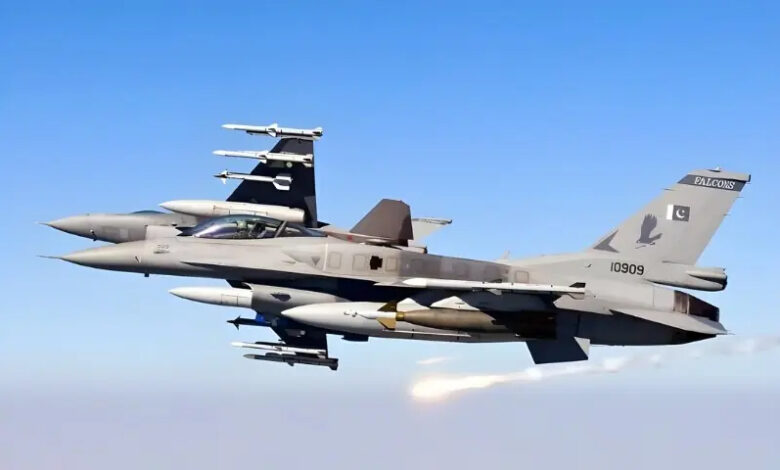
Although the exact number of missiles to be supplied to Pakistan remains undisclosed, defense observers believe this move signals Islamabad’s plan to begin **modernizing its fleet of F-16 fighter jets**.
No official confirmation or denial has yet been issued by Pakistan’s **Foreign Office**, **Pakistan Air Force (PAF)**, or the **Inter-Services Public Relations (ISPR)**.
Pakistan originally acquired its F-16 aircraft between **2007 and 2006** under the *Peace Drive* program, during which it also received **500 AIM-120C5 missiles**. The newly approved **AIM-120C8** variant is the export version of the U.S. Air Force’s most advanced **AIM-120D**, capable of extended range and enhanced targeting accuracy.
Raytheon began testing the C8 model in **2023**, and it has since been ordered by several U.S. allies. Analysts suggest the current deal may initially involve logistical, administrative, and training components, but it nonetheless reflects Washington’s renewed willingness to share **cutting-edge defense technology** with Pakistan.
The development follows **PAF Air Chief Marshal Zaheer Ahmed Baber Sidhu’s visit to Washington in July 2025**, where he met senior U.S. defense and State Department officials — a meeting that may have paved the way for this agreement.
According to the Pentagon, the larger $41.6 billion global program aims to standardize air defense capabilities across **more than 30 partner nations**, strengthening coordination among NATO and Indo-Pacific allies.
The entire program is expected to be completed by **2030**, with missile production and deliveries continuing throughout the decade.
U.S. defense officials note that the initiative is part of a broader strategy to maintain technological superiority amid rising global tensions involving **Russia, China, and Eastern Europe**.