PSO Leaders Criticize Political Situation, Call for University Status and Educational Reforms in Quetta Conference
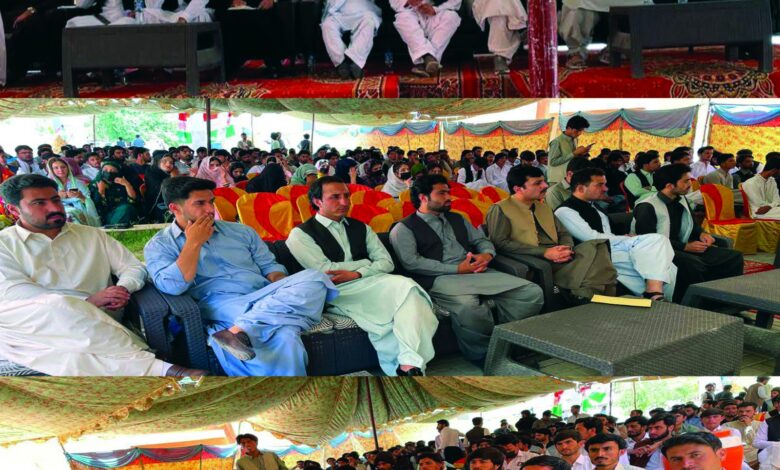
Quetta (KNN): Leaders of the Pashtunkhwa Milli Awami Party (PkMAP) and Pashtunkhwa Students Organization (PSO) have stated that the country is currently facing a severe crisis, alleging that opposition to “undemocratic and authoritarian measures” is often labeled as anti-state activity.
The remarks were made by PkMAP Central General Secretary عبدالرحیم زیارتوال, Central Secretary Dr. Hamid Khan Achakzai, District Quetta Senior Assistant Secretary Naseer Ahmed Kakar, PSO Central Organizer Saifullah Khan, Mahmood Achakzai, Waris Afghan, Zubair Tareen, and Dr. Noor Ali during a welcome ceremony for new students of Agriculture College and a regional conference in Quetta.

The conference also announced the election of new executive members, including Athak Khan, Qadir Khan, Ismat Khan, Tajamal Khan, Wusatullah, Wali Muhammad, Inam Kasi, Arian Khan, Asad Khan Kakar, Siddiqueullah, and Naqeebullah. Newly elected members took oath administered by PSO Central Information Organizer Asfand Yar Kakar. The stage proceedings were conducted by District Senior Assistant Secretary Wasay Sanzar, while the recitation of the Holy Quran was performed by District Assistant Secretary Tariq Watanpal.
Speakers said that failing to grant full university status to Agriculture University and Bolan Medical University despite legislation reflects “anti-education policies.” They demanded immediate issuance of official notifications for both institutions.
They also emphasized educational responsibilities, including monitoring closed schools, compiling lists of absent teachers, and ensuring transparency through media reporting. The speakers criticized the Education Department for failing to provide textbooks by May 18, calling it a serious administrative failure.
Referring to political conditions, the leaders alleged that governments were imposed through “Form 47,” which they claimed has weakened parliamentary authority, judiciary independence, and media freedom, resulting in economic instability, inflation, unemployment, and public hardship.
They further stated that corruption, nepotism, and mismanagement are widespread in the country, and alleged large-scale irregularities in development funds. The speakers also claimed that law and order issues and governance failures are worsening conditions in the province.
The leaders called on party workers to strengthen organizational structure and continue their political struggle for democratic and national rights until their goals are achieved.