Bridging Mountains and Seas Through Skills: Advancing Shared Growth Between Chinese and Pakistani Employees
Empowering Local Talent Through Knowledge Transfer and Sustainable Development
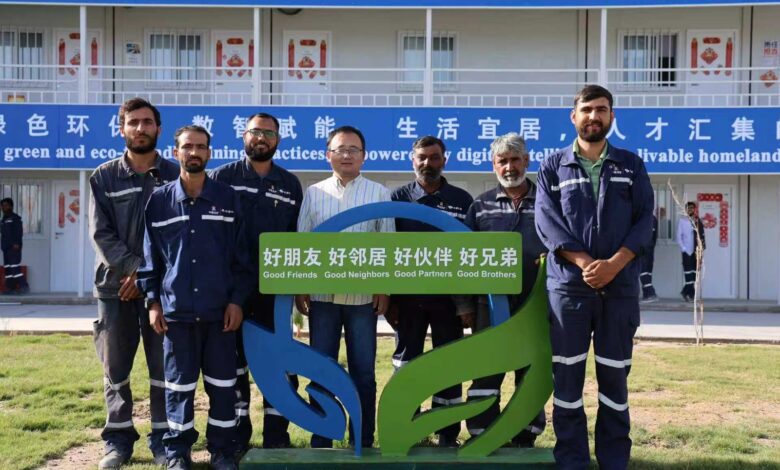
On April 13, a virtual China–Pakistan symposium brought together employees across borders in a meaningful exchange of experiences and achievements. The event marked both a formal farewell to Chinese technical instructors Liu Guangyuan and Wang Fengjie, and a moment of reflection on the remarkable professional growth of Pakistani employees over the past year.
Over the course of their assignment, the instructors—dispatched by Chinese partner institutions—were stationed at KMCL project sites in Saindak and Siah Dik. Their core mandate aligned closely with KMCL’s commitment to local capacity development: to transfer technical expertise, strengthen operational independence, and cultivate a skilled local workforce capable of sustaining long-term project success.


Guided by a practical, results-oriented training approach, the instructors integrated learning directly into operational environments. Moving beyond conventional classroom methods, they conducted on-site training at power distribution systems and maintenance workshops, combining hands-on demonstrations with real-time technical guidance. Complex electrical concepts were simplified into practical applications, enabling trainees to grasp and implement solutions effectively. Through continuous practice and mentorship, employees progressed from basic troubleshooting to independently managing technical tasks with confidence.
In parallel, emphasis was placed on strengthening communication capabilities, fostering more effective collaboration between Pakistani employees and Chinese engineers. Today, trainees are not only able to identify and report technical issues proactively, but also engage in solution-oriented discussions—reflecting a significant enhancement in both technical and interpersonal competencies.
This initiative exemplifies KMCL’s core values of safety, excellence, and people-centric development. Through structured mentorship, employees have developed a strong adherence to standardized operating procedures and a deeply rooted safety-first mindset—critical components of responsible and sustainable mining operations.
Beyond technical advancement, the program has delivered meaningful socio-economic impact. Enhanced skills have translated into improved career prospects, increased earning potential, and better living standards for employees and their families—demonstrating KMCL’s commitment to creating shared value for local communities.
Speaking at the symposium, Zhang Zhijun, Vice Deputy General Manager of MCCT Copper & Zinc and Chairman KMCL underscored the importance of human capital in driving sustainable development under the China–Pakistan Economic Corridor (CPEC). He emphasized that the objective of such initiatives is to localize expertise—transforming advanced technical knowledge into enduring, locally owned capabilities. He further expressed confidence that continued collaboration will nurture a new generation of highly skilled Pakistani professionals.
The symposium concluded on an emotional note, as Pakistani employees expressed deep appreciation for their mentors. While bidding farewell, it was evident that the instructors leave behind more than operational systems—they leave a legacy of knowledge, confidence, and opportunity.
As these skills continue to be shared and expanded, they will empower local talent to actively contribute to Pakistan’s industrial growth. This enduring exchange of knowledge not only strengthens operational excellence but also reinforces the spirit of partnership and shared progress that defines China–Pakistan cooperation.