Strait of Hormuz Standoff: Iran’s Chokepoint Strategy vs Trump’s Naval Counter-Blockade
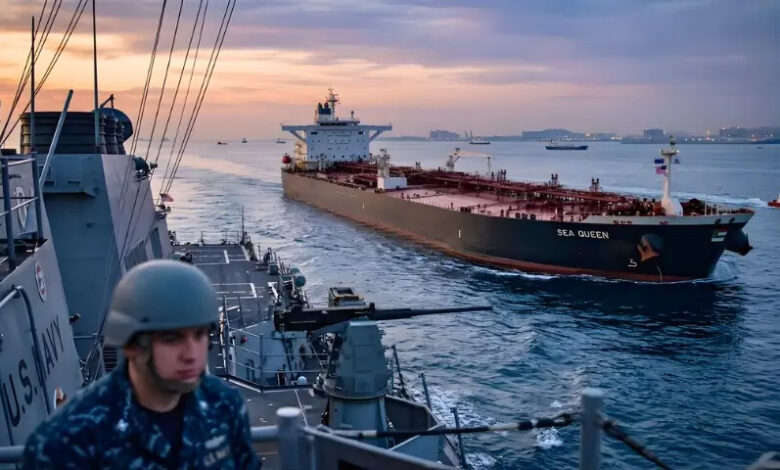
ISLAMABAD: Rising tensions in the Middle East have turned the Strait of Hormuz into a కీల battleground, as Iran’s chokepoint strategy clashes with a proposed US naval “counter-blockade” led by Donald Trump.
Following the collapse of 21-hour peace talks in Islamabad, Trump announced plans to block all vessels heading to or coming from Iranian ports. The move is seen as a direct response to Iran’s strategy of leveraging the narrow waterway to exert pressure on the global economy.


The crisis escalated after reported US and Israeli airstrikes on Iran in late February, which Tehran allegedly answered by deploying naval mines in the strategic passage. This disrupted global shipping before Iran later reopened the route under strict conditions.
Despite agreeing in principle to keep the strait open during negotiations, Iran reportedly redirected vessels toward routes نزدیک its territorial waters, particularly near Qeshm and Larak islands, citing mine-related risks. Analysts suggest this allowed Tehran to assert greater control and potentially collect transit fees.
In response, the US Central Command (CENTCOM) has proposed a broader blockade policy, reportedly applying restrictions across all vessels but allowing passage to ships not مرتبط with Iranian ports.
The strategic importance of the Strait of Hormuz is immense, with over 20% of the world’s oil and gas shipments passing through it. Any disruption carries serious implications for global markets.
To enforce the blockade, the United States Navy would need to undertake mine-clearing operations and maintain surveillance around Iranian ports. Reports indicate the presence of major US naval assets in the region, including aircraft carriers such as the USS Abraham Lincoln and the USS Ronald Reagan, alongside amphibious groups and hundreds of aircraft.
Meanwhile, Iran retains asymmetric capabilities despite past losses to its conventional navy. These include naval mines, drones, anti-ship missiles, and a fleet of small Ghadir-class submarines designed for operations in shallow waters.
Military experts describe the situation as a classic 21st-century maritime confrontation: the world’s most powerful navy facing a دفاعی network optimized for coastal warfare.
As both sides prepare for a potential escalation, the outcome of this standoff could have far-reaching consequences—not only for regional security but also for global energy supplies and economic stability.