SIFC Coordinator Unveils Business-Friendly Economic Roadmap
Corporate Tax Burden to Be Significantly Reduced, Interest Rates to Be Lowered

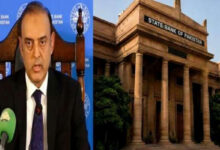
Islamabad: The National Coordinator of the Special Investment Facilitation Council (SIFC), Lieutenant General Sarfraz Ahmed, on Thursday presented a business-friendly economic roadmap aimed at making Pakistan’s economy more competitive. He announced that the corporate tax burden would be significantly reduced, interest rates would be lowered, and a realistic, market-based exchange rate would be adopted.
Speaking on the second day of the Pakistan Business Council’s “Dialogue on Economy,” he said the biggest challenge facing Pakistan today is the absence of a clear and coherent economic growth plan.

He urged all stakeholders to move away from a protectionist and subsidy-dependent system and build consensus on an export-driven growth model. “We have damaged our own fiscal situation. Our only solution has been to impose more taxes, and you (the corporate sector) are the easiest target because you are already in the tax net,” he added.
He revealed that the government is seriously considering reducing the 29% corporate income tax rate to 25%, abolishing the super tax, and eliminating inter-corporate dividend tax.
General Sarfraz emphasized that interest rates must also be reduced, noting that maintaining an 11% rate despite declining inflation is unjustified. He opposed artificially controlling the exchange rate, stating that Pakistan must adopt a realistic, market-determined, and competitive exchange rate.
He said that although Pakistan’s economy has achieved temporary stability, the core issue remains the lack of a long-term growth strategy. The country’s current model, based on consumption and borrowing, repeatedly leads to financial crises.
He stressed the need to shift to an export-driven model, as the import-substitution approach has consistently failed. He also criticized Pakistani businessmen for transferring substantial wealth abroad to the UAE, London, Singapore and New York instead of reinvesting in Pakistan.
Pakistan’s foreign direct investment (FDI) stands at a mere $1.2 billion, which he described as extremely low. He added that foreign investors will only come once domestic businesses begin investing in the country.
He reiterated that the SIFC was established as a single-window platform to fast-track project approvals and attract investment from Saudi Arabia and other countries.


