Greater Karachi Plan 2047: Rising Population Pressure Poses Major Challenge for City
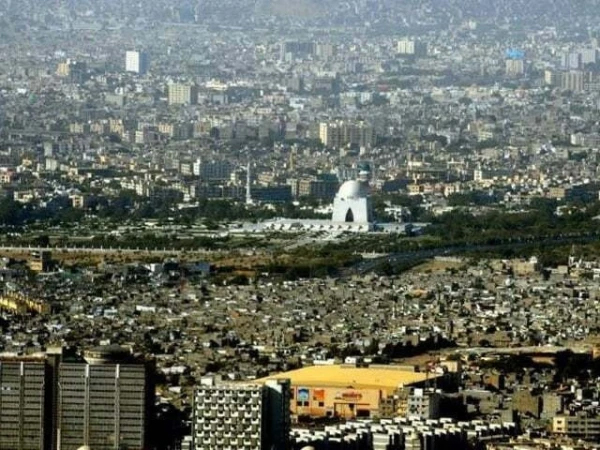
Karachi: The rising population pressure on Karachi has emerged as a significant challenge, prompting the Sindh government to work on a new master plan, named the Greater Karachi Regional Plan 2047. While key details of the plan have yet to be released, experts say the city’s growing population poses a serious challenge to urban planning.
Official statistics indicate that Karachi is the only city in Pakistan whose population has increased 44-fold since the country’s independence. At the time of Pakistan’s creation, Karachi had a population of 450,000, which has now surged to over 20 million. According to the 2023 census, Karachi’s population grew by 4 million in just five years—from 14.8 million in 2017 to 18.8 million in 2023. Other major cities in Pakistan did not witness such rapid growth; for example, Peshawar’s population decreased by 1.9 million as many residents migrated to Karachi.


A recent report by the Korea Green Growth Trust Fund, affiliated with the World Bank, states that while Pakistan’s overall annual population growth rate is 1.5%, Karachi’s growth rate is 6%. The report projects that Karachi’s population will reach 28 million by 2030.
The Strategic Development Plan 2020 highlights that rapid population growth in Karachi is driven by people moving to the city from across Pakistan in search of employment, alongside a significant population from Afghanistan, Bangladesh, and other Asian countries.
Zahid Farooq, an urban planning expert associated with Arif Hasan’s Urban Resource Centre, told *The Express Tribune* that reducing population pressure is essential for sustainable urban planning. He suggested creating employment opportunities in other provinces to curb migration to Karachi. Farooq emphasized that although master plans have been developed for Karachi in the past, none have been fully implemented due to political reasons.
He added that the new Greater Karachi Regional Plan 2047 must not be prepared in isolation; its proposals should be shared publicly, and feedback should be sought from the general public, professionals, and representatives from various sectors.
PPP leader Senator Waqar Mehdi stated that the new master plan is being developed under the supervision of international experts and aims to address the city’s needs over the next 50 years. He noted that previous master plans, including the Greater Karachi Plan 1952, Karachi Development Plan 1974–1985, and the Karachi Strategic Development Plan 2020 under former President Pervez Musharraf, were never implemented.
The Strategic Development Plan 2020 also highlights that Karachi is administratively divided among 20 federal, provincial, and local agencies, with only 31% under the direct control of the Karachi Metropolitan Corporation. Key areas managed by federal and provincial authorities include six cantonments, the Defence Housing Authority, Port Qasim, Karachi Port Trust, Pakistan Railways, Pakistan Steel Mills, and the Export Processing Zone.
The new plan aims to address these challenges comprehensively to ensure better urban planning for Pakistan’s largest city.