Balochistan Health and Education Reforms: Key Developments and Challenges Discussed in Legislative Session
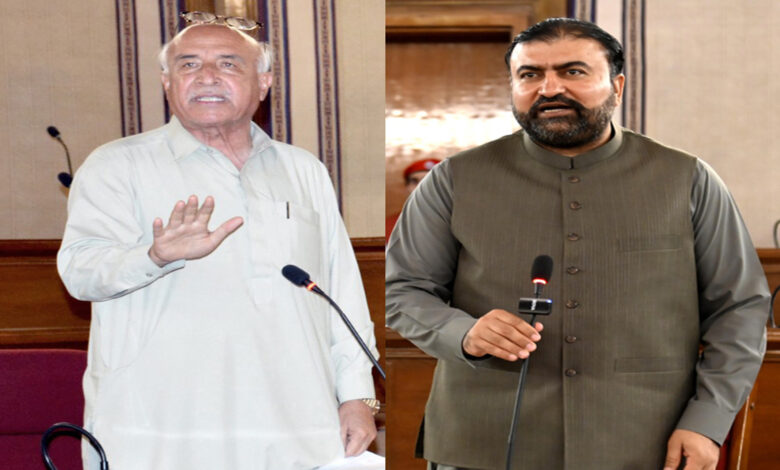
Quetta:In a recent session of the Balochistan Provincial Assembly, National Party leader and former Chief Minister, Dr. Abdul Malik Baloch, raised concerns regarding several key issues related to education and healthcare reforms in the province. Speaking on a point of order, Dr. Baloch highlighted the government’s failure to implement his earlier proposal to establish pathology labs in divisional headquarters where there is sufficient workforce. He also emphasized the need for semi-autonomous hospitals, a proposal he claimed had been ignored despite a promise from the Chief Minister.
Dr. Baloch further discussed the government’s plan to give the building of the Agriculture University to the technical training institution, NUTECH. He argued that the building should be handed over to the Agriculture University rather than being repurposed for NUTECH. In response, Chief Minister Mir Sardar Farooq Baghati clarified that the university had insufficient students and could not operate effectively, and thus the building would be used by NUTECH for technical education purposes. He assured that ownership of the building would remain with the government.

Dr. Baloch also pointed out the current situation in Balochistan’s universities, particularly the issue of underfunded institutions, where some universities are facing significant staffing issues with more teachers than students. He stressed that accountability should accompany funding to improve the higher education sector and make better use of the province’s youth.
Provincial Minister for Health, Bakht Mohammad Kakar, addressed the pressing issues within the health sector, acknowledging that a lot of work was left undone in the past. He revealed that no promotions for doctors had occurred since 2013, but under the current government, doctors had received promotions and were required to serve in their respective districts, ensuring that patients no longer had to travel to Quetta for treatment.
Minister Kakar also discussed the government’s efforts to improve healthcare facilities at the divisional level, including the appointment of gynecologists and the installation of AI cameras in hospitals to track employee attendance. He assured that health data for patients was being compiled, and any shortage of medicines would be addressed promptly. Furthermore, Kakar emphasized that the government was paying attention to primary healthcare, which had been neglected in the past, and was working to improve access to healthcare at the community level.
He also raised concerns about the water crisis in the province, explaining that over 40% of diseases in Balochistan are due to the lack of access to clean drinking water. He asserted that providing clean water would significantly reduce the prevalence of many diseases in the region. He mentioned that the government had allocated Rs. 5 billion for medicines, although he acknowledged that this amount would not last long, and that comprehensive data on regional disease rates was now available to guide better resource allocation.
Minister Kakar concluded by stating that while improvements would take time, the government was committed to ensuring that every citizen receives healthcare at their doorstep, ultimately working towards reducing the province’s health challenges.