Fake News Circulates Amidst Jaffer Express Attack in Balochistan
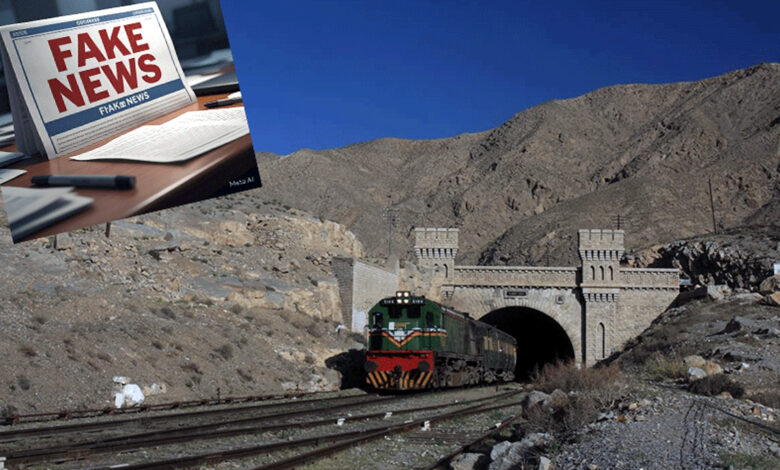
the Balochistan region near Mashkaf witnessed a terrorist attack on the Jaffer Express, which was traveling from Quetta to Peshawar. The attackers hijacked the train, and during the ensuing operation by security forces, 33 militants were killed, while 21 passengers and 4 Frontier Corps personnel lost their lives.
The incident, which lasted for two days, led to the circulation of several unverified reports across social, digital, and electronic media. Indian media also contributed to the spread of fake news, fueling confusion.
One of the first false reports came on the night of March 11, claiming that the train driver, Amjad Yaseen, was shot and severely injured before succumbing to his wounds. This story was later debunked as untrue. Another claim that surfaced during the operation was that 9 security personnel had been killed, which was also found to be inaccurate.
In addition, several videos began circulating on social media and were aired by prominent electronic media outlets, which claimed to be related to the operation. One particularly viral video showed a helicopter during the operation, but it was later revealed that this footage was old and not from the recent attack. Similarly, a video showing a train being set on fire spread on social media, but it was unrelated to the incident and turned out to be an old clip as well.
Indian media played a significant role in propagating these misleading stories, presenting their audience with sensationalized fake news.
According to analysts, the spread of fake news about the Jaffer Express attack not only affected the general public and the families of the victims but also led to confusion among journalists. The emergence of fake news was largely due to the lack of verified information from the government, which failed to provide timely and accurate updates to the press.
Experts believe that the government, security agencies, and district administration displayed negligence by not providing proper information to journalists, allowing fake news to take hold. Moreover, the spokesperson for the Balochistan government, whose job it is to communicate official information to the public, failed to answer calls and hid from their responsibilities. This failure created a vacuum, allowing fake news to spread unchecked and deeply influence public perception.