Constitutional Court Upholds Ban on Import of Indian and Israeli Books and Goods
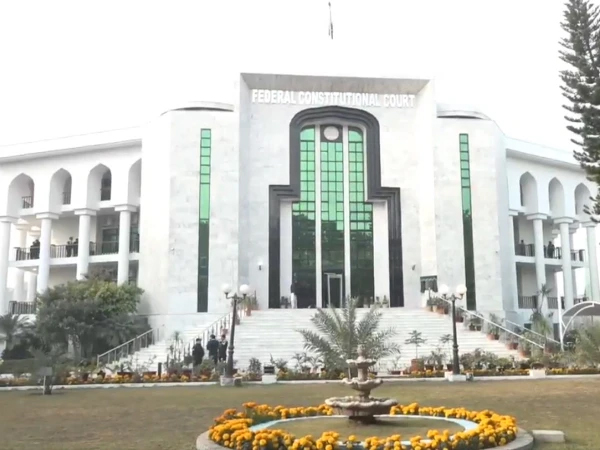
Islamabad: Pakistan’s Federal Constitutional Court has upheld the legality of the government’s notification banning the import of books and goods from India and Israel, overturning earlier directives issued by the Lahore High Court.
In a majority written judgment, Justice Aamer Farooq ruled that the High Court’s instructions to the federal government — including appointing an official to review the matter — were beyond its jurisdiction and amounted to suo motu action. Justice Ali Baqar Najafi also issued an additional note.


The court emphasized that matters related to foreign policy and national security fall exclusively within the domain of the executive, and the judiciary cannot interfere in such decisions. It further stated that determining trade relations with other countries is a discretionary power of the government, and any judicial intervention in trade policy would constitute overreach.
The ruling acknowledged that the right to read is a fundamental human right linked to the right to life under Article 9 of the Constitution. However, it clarified that this right is subject to existing laws and foreign policy considerations.
Justice Aamer Farooq noted that Pakistan’s Constitution is an “evolving document” capable of interpreting new rights over time. The court also observed that Article 25-A guarantees free education only up to school and college levels.
The case originated from a petition filed by a private bookstore in Lahore seeking permission to import law books from India, arguing they were more affordable and relevant due to similarities in legal systems.
The federal government had imposed a blanket ban on trade and imports from India in 2019 following the revocation of Article 370. While the Lahore High Court had earlier ruled in favor of easing restrictions on book imports, the Ministry of Commerce challenged that decision in the Constitutional Court, which has now set aside the High Court’s ruling.