Undeclared Martial Law in Pakistan, Democracy Under Threat: Afrasiab Khattak

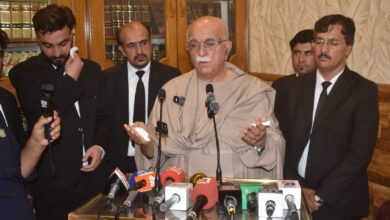
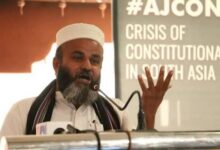
Quetta:Afrasiab Khattak, founding leader of the National Democratic Movement (NDM) and head of the party’s Central Research and Policy Committee, has alleged that an undeclared martial law is currently in place in Pakistan. Speaking at a seminar organized by the National Democratic Students at the Quetta Press Club titled *“The Current and Evolving Regional Situation,”* the former senator strongly criticized the political and constitutional direction of the country.
Khattak stated that democratic forces in the past had successfully blocked the path to martial law through the Constitution, but today, that very Constitution is being sidelined. “There is a shadow martial law in the country today. In 2013, PTI’s sit-in was unconstitutional, and in 2018, Imran Khan was imposed through rigged elections,” he said.
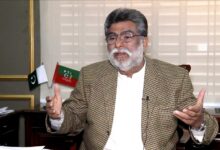
He further claimed that Pakistan’s establishment facilitated these developments, acting under external influence. “In Pakistan, martial law is often imposed on the directives of the United States,” Khattak alleged.
Referring to the role of the judiciary, he said, “The Supreme Court has been reduced to the level of a Tehsildar’s court,” expressing deep concern over the erosion of institutional independence. He warned that the proposed 27th Constitutional Amendment, following the 26th, would be the final nail in the coffin of democracy.
Khattak also accused the establishment of reviving the banned Tehrik-i-Taliban Pakistan (TTP). “The Chief Minister of Khyber Pakhtunkhwa is paying extortion to the TTP. The people of Khyber Pakhtunkhwa and Balochistan are being turned into political prisoners,” he stated.
Commenting on regional issues, he claimed that the China-Pakistan Economic Corridor (CPEC) has come to a halt, and ongoing drone attacks have killed innocent Pashtun women and children, with compensation allegedly paid by the U.S. government for the victims.
Khattak held the state responsible for escalating violence in Balochistan, saying, “Peaceful people are being pushed toward violence to justify a crackdown. The worsening situation in Balochistan is the state’s own doing.”
He concluded by stating that democracy no longer exists in the country. “Pakistan is now being run by the Apex Committee, not by elected representatives, which is why there is no sign of improvement,” he said.
Afrasiab Khattak’s remarks reflect growing discontent among progressive and nationalist circles, particularly in Khyber Pakhtunkhwa and Balochistan, over centralization of power, lack of civil liberties, and military interference in civilian affairs.