Pakistan Considers Taxing Freelancers and Social Media Content Creators in Upcoming Budget
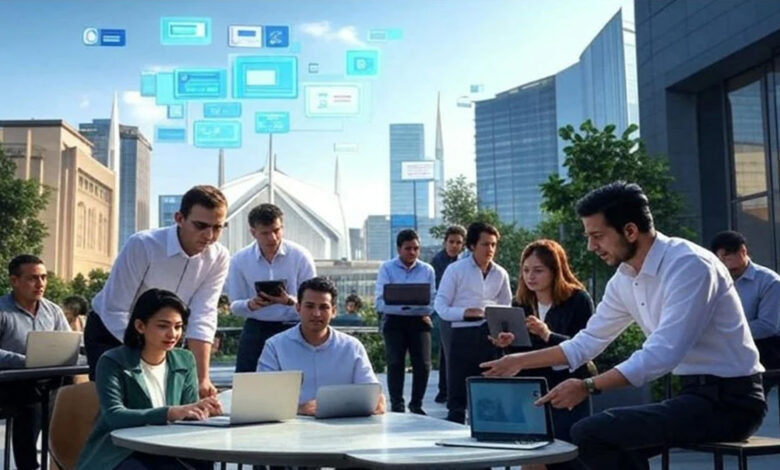
ISLAMABAD – As Pakistan prepares to announce its budget for the fiscal year 2025-26, there is growing anticipation across various sectors regarding potential changes and relief measures. Among the key proposals, the government is reportedly considering imposing taxes on freelancers and social media content creators, especially TikTokers.
Freelancers, who are integral to Pakistan’s growing digital economy, have expressed willingness to pay taxes, provided the system is made transparent and simple. They believe that a clear tax policy will eliminate the prevailing uncertainty and improve their working conditions. However, freelancers have also put forward a set of demands for the government in the upcoming budget.

**Freelancer Concerns and Demands**
Experienced freelancer, Tahir Omar, who has been working for over a decade, shared his views on the challenges faced by freelancers in Pakistan. He highlighted that the digital economy, especially freelancing, has become an invaluable asset for Pakistan’s economy. Unfortunately, complex government policies and banking system barriers have made this sector struggle.
“The tax filing process is so complicated and unclear that many freelancers feel it’s easier to keep their earnings abroad,” Omar said. “Before every budget, we are scared of new policies, which severely damages our confidence in the system.”
Due to the lack of trust in the system, many freelancers have opted to acquire ‘Digital Nomad Visas’ from other countries, bringing only the necessary amount back to Pakistan while leaving the rest in countries where freelancing is better supported and protected.
**Banking and Payment System Issues**
Freelancers also face challenges with the banking system. While some banks have introduced services for freelancers, many still face obstacles when opening accounts and transacting. Even with a certification from the Pakistan Software Export Board (PSEB), the bureaucratic hurdles make the process difficult and discourage freelancers from trusting the local banking system.
When it comes to taxes, Omar pointed out that freelancers face multiple taxes on international transactions, including international transaction fees, advance income tax, federal excise duties, and currency conversion charges, which add up to 25% or more of the payment amount.
“For instance, if a freelancer wants to run an advertisement on Facebook, they end up paying much more than the actual cost,” he added. “However, when the same payment is made through virtual cards or Payoneer, the cost is significantly lower.”
Omar also criticized the rising charges by Payoneer, the only available option for online payments in Pakistan, and urged the government to either regulate it or introduce alternative platforms to create a healthy competition and offer relief to users.
**Recognizing Freelancers as Small and Medium Enterprises (SMEs)**
Omar further proposed that freelancers be recognized as small and medium enterprises (SMEs), which would allow them to access grants, subsidies, and business loans. This, he believes, would not only foster their growth but also increase Pakistan’s exports.
**Lack of PayPal and International Payment Challenges**
Zen Alabedin, a freelancer from Rawalpindi, highlighted the absence of PayPal in Pakistan, which is a widely used payment platform in over 200 countries. He stated that the lack of PayPal availability makes it difficult for Pakistani freelancers to receive payments, diminishing client trust and forcing freelancers to pay higher fees on alternative services. Often, valuable clients cancel contracts solely due to the unavailability of PayPal.
Alabedin urged the government to seriously negotiate with PayPal to provide its services in Pakistan, eliminating regulatory or banking barriers that may be obstructing its entry.
**No Concrete Support for Freelancers**
Alabedin also emphasized that while Pakistani freelancers bring in billions of dollars in foreign exchange annually, there are no significant, sustainable schemes at the government level for their welfare. He called for zero-interest or low-interest loans, subsidies for technology purchases, and government support for software and equipment.
“Freelancers need more government initiatives, such as co-working spaces, to rebuild their trust in the system,” he said.
**Towards a Friendlier Digital Economy**
In conclusion, if the government is serious about promoting the digital economy, it must simplify, streamline, and make tax, banking, and international transactions more transparent and friendly for freelancers. This is the sector that, with minimal investment and government support, is bringing millions of dollars into the country annually.
As the government prepares its budget, freelancers across Pakistan are hopeful that their voices will be heard, and the necessary changes will be made to help them thrive in an increasingly global digital marketplace.