Transparent Elections Can Save Pakistan, Says Shahid Khaqan Abbasi; Highlights Alarming Situation in Balochistan

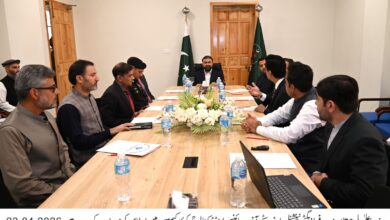
Quetta: Former Prime Minister and Convener of Awam Pakistan Party, Shahid Khaqan Abbasi, has stated that Pakistan can be steered in the right direction if three transparent elections are held. Speaking at the Balochistan High Court Bar, Abbasi expressed serious concerns about the worsening situation in Balochistan, where highways are blocked and insecurity is rampant. He noted that young people in Balochistan are taking up arms and heading for the mountains, a reflection of growing disenchantment and lawlessness.
Abbasi emphasized the need for transparency and public engagement in national matters, particularly resource distribution. “The people of Balochistan must be informed about what they will gain from the Reko Diq project,” he said. Criticizing the political system, he questioned the integrity of Senate appointments, saying, “People did not become senators from Balochistan by paying 700 million rupees.”
He further lamented the absence of justice in the country, highlighting that even the Chief Justice is unable to hear constitutional petitions. “Injustice weakens the foundation of a nation,” he stated. Abbasi said provinces are not being run in accordance with the Constitution and called for a review of the Mines and Minerals Act, warning against its constitutional violations.
He also pointed out that disillusionment among youth is not limited to Balochistan but is prevalent in Punjab, Sindh, and Khyber Pakhtunkhwa as well. “Pakistan is not functioning under constitutional norms,” he said.
Abbasi noted that 3 billion liters of oil pass through Balochistan into Pakistan, and yet, the province suffers from smuggling and economic deprivation. “All experiments conducted on Pakistan have failed, and the burden has always fallen on the people,” he remarked. He also mentioned the sacrifice made by lawyers in 2016 and voiced support for freedom of expression, particularly for figures like Mah Rang Baloch, saying that women should not be silenced or mistreated.
In the same event, former Supreme Court Bar President Amanullah Kanrani echoed Abbasi’s concerns. He said that laws in the country have been altered to benefit the few, with no respect for the weak or strong. “Balochistan is not small—it constitutes more than half of Pakistan,” Kanrani stated. He added that the current situation in Balochistan is beyond the control of political leaders like Sardar Akhtar Mengal and Dr. Malik Baloch.
Kanrani highlighted the long-term importance of the Reko Diq project, stating it has a life span of 300 years, and emphasized that even the British failed to establish complete control over Balochistan, suggesting that today’s powers would struggle even more. He concluded by reminding the audience that Balochistan had not supported any of the four martial laws imposed in Pakistan.