**No Enforced Disappearances by State After Feb 1, Says Balochistan CM Sarfraz Bugti**

**Quetta:** Balochistan Chief Minister Mir Sarfraz Bugti has declared that after February 1, there will be no enforced disappearances by the state or the government, as a clear legal framework has been put in place to address the long-standing issue of missing persons in the province.
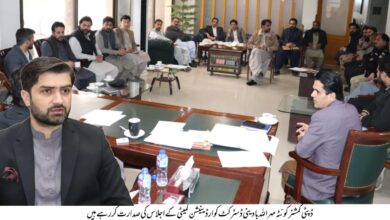
He made these remarks while chairing the 22nd meeting of the provincial cabinet at the Chief Minister’s Secretariat in Quetta, where several important administrative, legal, social, educational, and development-related decisions were approved.
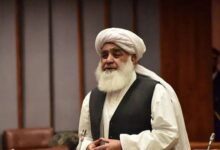
The chief minister said the issue of missing persons in Balochistan had long been used as an organized propaganda tool against the state of Pakistan, despite the fact that similar cases are more prevalent in other provinces, particularly Khyber Pakhtunkhwa. He criticized certain political elements for exploiting the sensitive issue for political gains without making serious efforts to find a permanent legal solution.
Bugti said it was to the credit of the provincial government, cabinet members, the Balochistan Assembly, and the chief secretary that a comprehensive and effective law had been passed to permanently resolve the issue. He emphasized that after February 1, enforced disappearances would no longer occur, and allegations against the state would be addressed through a defined legal mechanism.
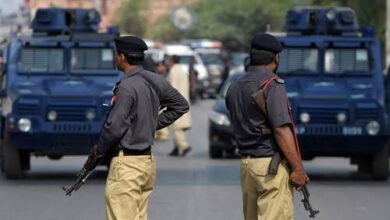
He explained that while security forces conduct intelligence-based operations in gray areas and may detain suspects for investigation, the problem of missing persons would be eliminated under the new framework. He added that if individuals go missing due to terrorist organizations or voluntarily go into hiding, the state cannot be held responsible.
The chief minister said courts and relevant commissions exist to examine claims of disappearances, but in Balochistan, a narrative of “self-styled disappearances” is often quickly turned into propaganda against the state. To counter this trend, the Balochistan Prevention of Detention and Radicalization Act (Double One Tetra A) has been enacted, and the cabinet has also approved its Rules 2025.
Under the law, designated centers will be established where suspects will be investigated under the supervision of authorized police officers, along with counseling to counter extremism, misleading narratives, and anti-state thinking. Families will be informed within 24 hours, visitation will be allowed, medical facilities provided, and detainees will not be transferred outside these centers.
During the meeting, the cabinet also approved the Balochistan Witness Protection (Amendment) Bill 2025. Bugti said that due to the lack of an effective witness protection system in the past, conviction rates in terrorism and serious crimes were as low as one to two percent. With new reforms, “faceless courts” have been established to ensure complete anonymity of witnesses, which is expected to raise conviction rates by 50 to 60 percent.
The cabinet expressed satisfaction over merit-based recruitments through online testing in the finance department and agreed to gradually introduce digitized recruitment processes in other departments. It also approved the abolition of the Religious Affairs Department and the adjustment of its employees into other departments.
Other key decisions included the establishment of two new divisions—Pishin and Koh-e-Suleman—administrative inclusion of Ziarat into Loralai, formation of Municipal Committee Karbala in Pishin district, approval of evaluation policy for law officers, amendments to grant-in-aid policy for the Minority Affairs Department, measures to eliminate child labor, declaration of higher technical education as an essential service, and verification of academic credentials of contract teachers.
The chief minister directed the Chief Minister Inspection Team to verify degrees of recently recruited contract teachers and ordered FIRs against holders of fake degrees, starting from Naseerabad and Dera Bugti.
The cabinet also approved the inclusion of the national curriculum in the provincial syllabus from the academic year 2027–2026, ad-hoc recruitment of mathematics, science, and English teachers in middle, high, and higher secondary schools under the Chief Minister Academic Excellence Program, and the Balochistan Protection and Promotion of Reproductive Health Rights Bill 2026 to improve maternal and child health and ensure reproductive health rights.
Additionally, a secretaries-level committee was formed to review the feasibility of establishing food streets from Saleem Medical Complex to Imdad Chowk and from Taxi Stand to Liaquat Square.
Concluding the meeting, Chief Minister Sarfraz Bugti termed the cabinet’s decisions a practical example of good governance, saying that effective legislation and timely implementation were essential to restoring public trust in the state.