Scientists Discover New “Chonks” Microbe Capable of Storing Carbon and Fighting Climate Change
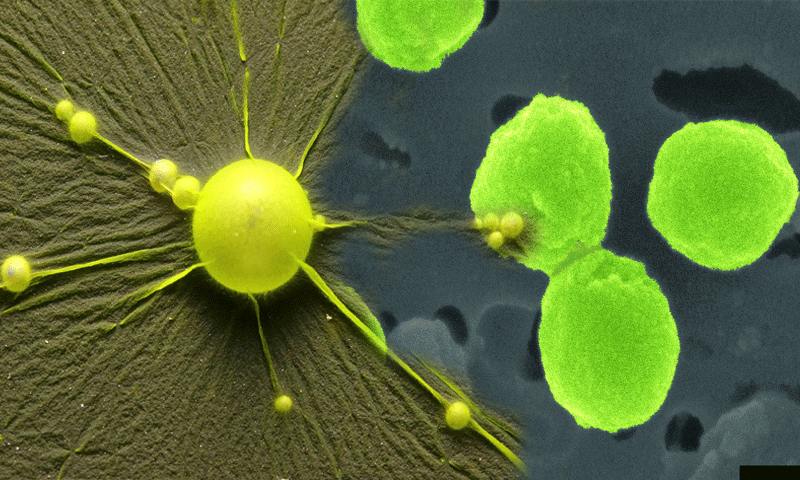
Scientists have discovered a new green mutant microbe, named “Chonks,” which has the remarkable ability to fight climate change by absorbing and storing large amounts of carbon from the atmosphere.
According to Science News, a research team led by microbiologist Max Schubert identified the Chonks microbe off the coast of Italy’s Vulcano Island, in deep waters where sunlight penetrates. The team had been searching for microorganisms that use carbon dioxide for photosynthesis, but instead, they found a naturally occurring mutant strain of cyanobacteria that performs photosynthesis at an accelerated rate.


The microbe, named *Synechococcus elongatus*, is known for its rapid growth and its ability to tolerate various environmental conditions. Chonks has emerged as a superpowered version of this bacteria.
In laboratory tests, the researchers found that the individual Chonks cells grew much faster than those of cyanobacteria. The number of these cells also increased significantly, and Chonks was observed to store carbon at a higher rate than any other strain of *Synechococcus elongatus*. The microbe rapidly packs carbon into its cells, as evidenced by its ability to sink quickly and condense into a dense form in test tubes.
Researchers believe that Chonks’ ability to store large amounts of carbon could be incredibly helpful in combating climate change. By pulling carbon from the atmosphere and packing it into its cells, Chonks could potentially help store this carbon at the bottom of the ocean, providing a natural solution to reducing atmospheric carbon levels.
The cells of Chonks are more effective at absorbing carbon compared to other cyanobacteria found on the ocean floor, and because they sink quickly, they could play a crucial role in removing carbon from the water’s surface.
This discovery opens new possibilities for using marine microbes in the fight against global warming and provides hope for finding more effective solutions to climate change.