Sindh Cabinet Approves Major Health Reforms; Moves to Transfer Administrative Control of JPMC and NICH to Provincial Government
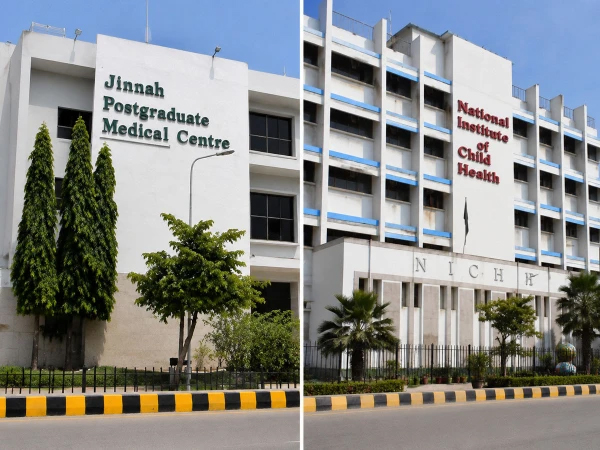
KARACHI: The Sindh Cabinet has approved key reforms in the health sector, paving the way for the formal transfer of administrative control of major federal health institutions, including Jinnah Postgraduate Medical Centre and National Institute of Child Health to the provincial government.
The cabinet meeting was chaired by Chief Minister Murad Ali Shah at the Chief Minister House, where four major agenda items related to the health sector were approved.


Officials confirmed that the cabinet endorsed the draft bill titled JPMC and NICH Operations and Management Act 2025, which formally enables Sindh to assume administrative authority over the two major healthcare institutions. The move is expected to strengthen provincial control over healthcare delivery and management.
The cabinet was also informed that the National Institute of Cardiovascular Diseases is already functioning under a provincial legal framework.
As part of the reforms, the provincial cabinet approved a structured mechanism for appointing executive directors of JPMC and NICH, along with a formal procedure for removal in cases of poor performance or incompetence. It also approved the inclusion of a Joint Secretary from the Federal Ministry of Health in the governing board.
The cabinet allowed the bill to be tabled in the Sindh Assembly after legal vetting by the Law and Parliamentary Affairs Department.
In another key decision, the cabinet approved continuation of the Electronic Provincial Procurement Data System (EPADS) for the procurement of life-saving medicines, ensuring transparency and uninterrupted supply of essential drugs.
For the fiscal year 2026–27, the government decided to maintain the existing procurement system for medicines and medical kits, including oncology and vector-borne disease medications under the EPADS framework. Preparatory work for the 2027–28 tender cycle will begin in July 2026.
The cabinet also approved the Sindh Postgraduate Residency Policy 2026, introducing a centralized admission system for postgraduate medical training across all public medical universities and teaching hospitals.
Under the new policy, a unified entrance test will be introduced for FCPS-II and other postgraduate programs, replacing individual university-based admissions. A total of 3,794 training seats have been allocated with a budget of Rs 4.73 billion.
Officials said a zero-vacancy mechanism will be implemented to ensure immediate utilization of vacant seats. A provincial postgraduate committee will oversee admissions, curriculum, and seat distribution, while mandatory training rotations in DHQ and THQ hospitals have also been approved.
The cabinet further decided to give additional merit weightage to doctors serving in underdeveloped areas. Strict penalties were also introduced for candidates withdrawing from training programs, including restrictions on future admissions and refund of stipends.
Additionally, the cabinet approved amendments to the Sindh Safe Blood Transfusion Act 2026, expanding eligibility criteria for the head of the Blood Transfusion Authority and introducing revised qualifications for the post of provincial health secretary, allowing experienced medical professionals, including MBBS doctors and hematology specialists, to be considered.
Officials said the reforms aim to improve governance, transparency, and efficiency in the province’s healthcare system.