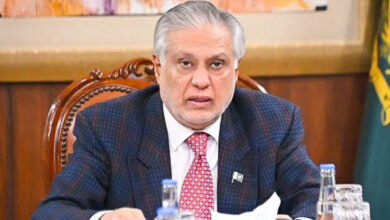
Provinces Controlling Population Growth Should Get Incentives in NFC Award: Ahsan Iqbal

ISLAMABAD: Federal Minister for Planning, Development and Special Initiatives Ahsan Iqbal has proposed that provinces showing progress in controlling population growth should be given additional incentives in the National Finance Commission (NFC) Award.
Speaking at the launching ceremony of the National and Provincial Population Projections 2023–2050, the minister said that rapid population growth has become a major challenge for Pakistan’s sustainable development, economic stability, and efficient use of resources.
He noted that currently 82% of resource distribution in the NFC Award is based on population share, and stressed the need for reforms that encourage a balance in population growth. He added that provinces currently have no strong incentive mechanism to reduce or manage population growth effectively.
Ahsan Iqbal suggested that provinces demonstrating responsible population planning and improvement in demographic balance should be rewarded with additional financial incentives.
He warned that if the current trend continues, Pakistan’s population could reach 370 to 400 million by 2050, placing severe pressure on healthcare, education, employment, water, and food resources.
The minister highlighted that Pakistan is now planning its future based on the first-ever digital census-based population projections, calling it a milestone for policymaking and equitable resource distribution.
He said population is not just a number but a key national issue linked to human capital, economy, education, health, and national security.
Referring to Islamic principles, he said balance and moderation are essential for sustainable development, and emphasized that population balance is a matter of national survival and future generations’ wellbeing, not a religious debate.
He further stated that if population growth exceeds available resources, living standards will decline significantly.
The minister expressed concern that Pakistan’s population growth rate is comparable to some of the least developed countries, which is alarming for a nuclear state.
He noted that earlier assumptions suggested population growth was stabilizing, but the 2023 census revealed a worsening situation.
Ahsan Iqbal stressed the need to focus on building a skilled, educated, and healthy workforce instead of merely increasing population numbers.
He revealed that around 40% of children in Pakistan suffer from malnutrition and growth-related issues due to limited household resources.
He declared the situation a “national emergency” and emphasized the urgent need to balance population and resources.
According to projections, the population under 18 years may rise from 117 million to 140 million, while the working-age population could increase from 135 million to 255 million by 2050.
He said this demographic shift could become a major opportunity if properly managed through education, skills development, healthcare, and employment generation, turning it into a “demographic dividend.”
The minister said these projections will serve as a foundation for Pakistan’s development frameworks including Uraan Pakistan, Vision 2035, the Sustainable Development Goals (SDGs), upcoming five-year plans, and the NFC Award.
He also emphasized the use of data-driven governance and modern technologies, including artificial intelligence, for effective planning.
He noted that after the 18th Constitutional Amendment, population-related responsibilities lie with the provinces, urging them to take practical steps.
He reiterated his proposal to reform the NFC Award to reward provinces that successfully manage population growth.
The event was attended by Federal Health Minister Mustafa Kamal, Planning Commission members, UNFPA representative Dr. Gelnara Kadyrova, senior government officials, experts, researchers, civil society members, and media representatives.