New Solar Policy Sparks Consumer Concerns Over Grid Capacity and Net Metering Rules
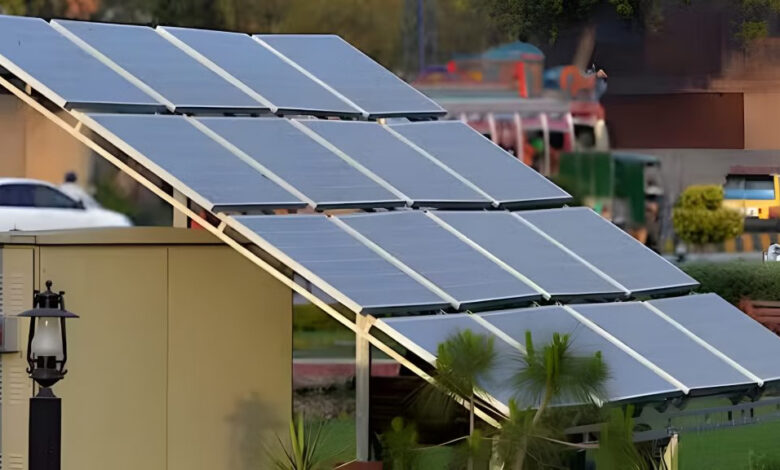
**Islamabad (Qudrat Daily):** Recent solar energy policies in Pakistan have created new challenges for consumers, raising concerns among both residential and commercial users.
According to new directives issued by the Power Planning and Monitoring Company, electricity distribution companies have been instructed not to approve new solar connections if solar generation load on a transformer reaches 80 percent of its capacity. These instructions apply not only to Lahore but also to other distribution companies across the country, including Islamabad Electric Supply Company (ISCO), Multan Electric Power Company (MEPCO), and Faisalabad Electric Supply Company (FESCO).


Experts say the policy effectively limits the number of consumers who can install solar systems based on transformer load capacity. Additionally, a mandatory load flow study will now be required for systems exceeding 250 kW, potentially impacting many residential and commercial areas. The government maintains that these measures are necessary to prevent reverse power flow, voltage fluctuations, and to safeguard the national grid.
Solar energy expert Yasir Siddiqui criticized the restrictions, calling them unfair to electricity consumers. He argued that instead of discouraging solar adoption, the government should focus on increasing overall grid capacity. According to him, relying solely on grid connections without solar is more expensive and less efficient, adding to consumers’ financial burden.
In December, the National Electric Power Regulatory Authority (NEPRA) amended prosumer regulations and revised net metering rules. Under the updated framework, electricity exported from solar systems to the grid will be purchased at Rs 11 to 13 per unit, while electricity drawn from the grid will be charged at the full applicable tariff. Consumers are also facing additional challenges due to shortages of green meters and the high cost of AMR meters.
The government has further imposed a 10 percent tax on imported solar panels, leading to an increase in overall system costs. Experts believe these measures are primarily aimed at addressing circular debt in the power sector and managing capacity payments to Independent Power Producers (IPPs).
However, energy analysts emphasize that rather than discouraging solar users, authorities should upgrade grid infrastructure to accommodate renewable energy, promote battery storage and hybrid systems, and introduce more favorable net billing rates. While solar energy remains beneficial for self-consumption, they stress that practical reforms are essential to ensure its continued growth in Pakistan.