Economy Cannot Be Run with Force; PM Believes in Centralization, We Believe in Decentralization: Bilawal Bhutto
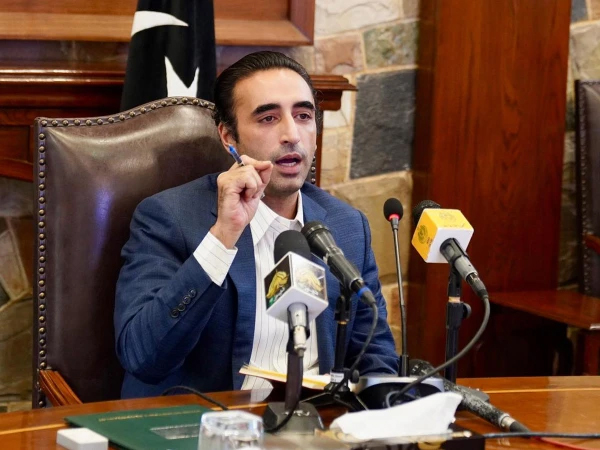
Lahore: Pakistan Peoples Party (PPP) Chairman **Bilawal Bhutto-Zardari** has said that while the Prime Minister believes in **centralization**, the PPP firmly supports **decentralization**, emphasizing that economies cannot be run through force.
Speaking in Lahore, Bilawal said that successive governments have tried to operate the economy through coercive measures, but “**the economy cannot be run with a stick**.” He added that discussions about Pakistan’s business history are often misleading, but instead of dwelling on the past, the focus should be on the future. He reaffirmed that the party will work alongside the **FPCCI Advisory Group** for economic development.

Bilawal highlighted Pakistan’s longstanding relationship with China, saying, “We are proud that for three generations we have strengthened Pakistan–China ties.” He noted that China has offered significant trade concessions to Pakistan, but the country has failed to fully capitalize on them. He stressed the need to strengthen **district-level economic activity** to derive maximum benefit.
Commenting on global economic shifts, he said the **tariff war** has opened international economic opportunities for Pakistan. He thanked Europe for the **GSP+ status**, noting that while Pakistan benefited, European exports also rose by **60%**. He said the President of Pakistan, governors of Punjab and Khyber Pakhtunkhwa, the Sindh government, and the Prime Minister are all working to address the concerns of the business community.
Reiterating the PPP’s stance, Bilawal said, “The Prime Minister believes in centralization, but the PPP believes in decentralization.” He expressed full support for FPCCI’s district-level economic initiatives and reminded that prior to the **18th Amendment**, the federal government collected sales tax — a system the PPP considers outdated.
Bilawal stressed that a sustainable economy can only be achieved through empowerment at the grassroots level, not through centralized control or coercive governance.