IMF Flags Pakistan’s Ineffective Use of Beneficial Ownership Data, Hindering Anti-Corruption Efforts
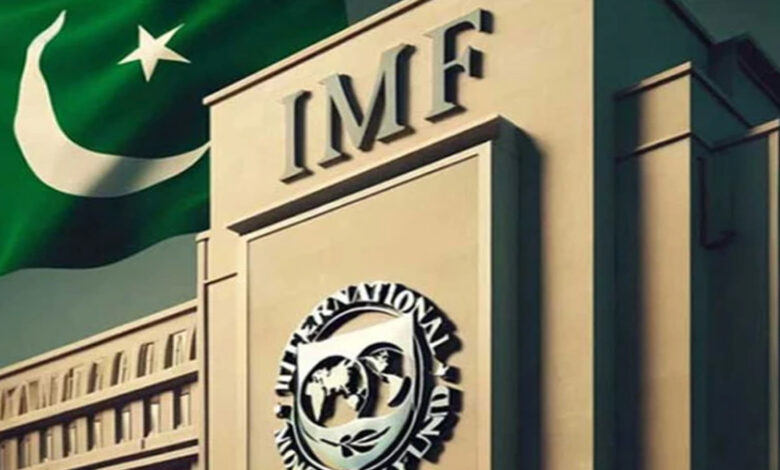
ISLAMABAD:The International Monetary Fund (IMF) has raised serious concerns about Pakistan’s inadequate use of beneficial ownership (BO) data, warning that this failure is hampering efforts to prevent corruption-linked money laundering and allowing shell companies to secure public contracts.
In a draft of its **Governance and Corruption Diagnostic Assessment Report**, the IMF highlighted major deficiencies in the implementation of Pakistan’s BO framework, despite regulatory reforms introduced under the Financial Action Task Force (FATF) in 2016.


The report found no clear evidence of regular data-sharing or coordinated efforts between the **Securities and Exchange Commission of Pakistan (SECP)** and investigative agencies for the use of BO information in financial investigations.
While Pakistani authorities have contested this observation, stating that relevant agencies do use BO data—except in the case of **Designated Non-Financial Businesses and Professions (DNFBPs)**—the IMF maintains that effective implementation remains far below international standards.
The global lender recommended the establishment of a **multi-agency working group** to review BO data for anti-corruption investigations and emphasized the need for structured cooperation between SECP, the State Bank of Pakistan, the Federal Board of Revenue (FBR), commercial banks, money service providers, and law enforcement bodies.
According to the report, Pakistan’s legal BO framework is foundational, but **weaknesses in enforcement, verification, inter-agency access, and legislative clarity** are significantly undermining its effectiveness.
Pakistani officials noted that SECP had already provided direct access to its BO database to relevant authorities and that the **Financial Monitoring Unit (FMU)** uses the data in analyzing suspicious transactions. In 2018, SECP had mandated all companies to collect detailed BO information including full name, ID or passport number, nationality, country of origin, email, residential address, registration and exit dates, and reasons for ownership changes.
However, the IMF stressed that there remain **critical gaps in implementation**, making it difficult to trace illicit financial flows and curb public sector corruption.
The report also flagged the need for stronger oversight in the DNFBP sector, citing **low technical capacity, weak compliance culture, and inconsistent supervision**.
Despite ongoing government efforts to strengthen inter-agency access and improve data transparency, the IMF emphasized that without robust enforcement, Pakistan’s anti-money laundering and anti-corruption frameworks will remain insufficient to meet international benchmarks.
—
Let me know if you’d like a summarized version, a press release format, or quotes highlighted for media use.