Artificial Alliances and Decisions Made in Closed Rooms Will Push the Country into Deeper Political, Economic, and Moral Crises: Maulana Abdul Wasey
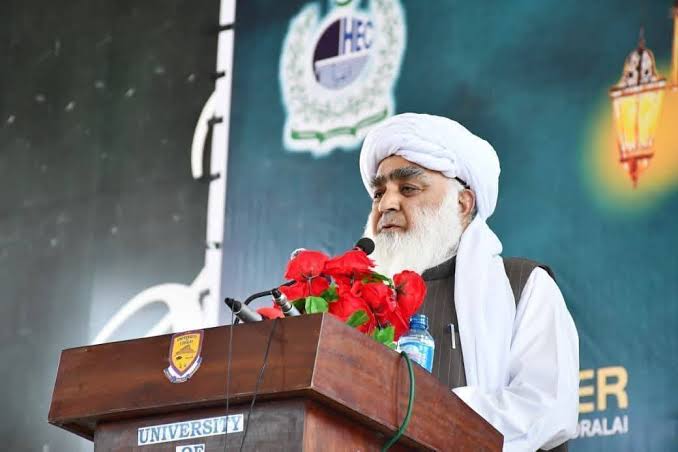
Quetta (Daily Qudrat Quetta) – Jamiat Ulema-e-Islam (JUI) Balochistan Provincial Amir Senator Maulana Abdul Wasey has said that the entire life of Mufakkir-e-Islam Hazrat Maulana Mufti Mahmood was devoted to the struggle for the protection of faith, the Constitution, democracy, Islamic identity, national sovereignty, and Khatm-e-Nubuwwat. Mufakkir-e-Islam Mufti Mahmood’s struggle is a source of guidance against contemporary fitnas; even today, his thoughts are a guiding light for the protection of Islamic ideology, religious values, and national identity. The fundamental cause of the current political uncertainty and public anxiety is the sabotage of the public mandate in the February 8 elections and the manipulated polls; the tampering with election results has damaged public trust in the democratic system. The country needs not an artificial political arrangement but a genuine public mandate, the supremacy of the Constitution, and a transparent democratic process.
He said that Mufti Mahmood not only confronted the fitnas of his era on the intellectual and ideological front but also proved through Parliament, the political arena, and practical struggle that religion and politics are not separate from each other; rather, a righteous political struggle is indispensable for the protection of Islamic values and the reform of society. Mufti Mahmood resisted dictatorship, raised his voice for democratic principles, played an effective role in Parliament for the protection of Islamic laws and religious identity, and played a leadership role in the historic struggle for the protection of the belief in Khatm-e-Nubuwwat.

He said that Mufti Mahmood’s struggle was not merely a political struggle of one era but complete guidance for confronting the intellectual, cultural, political, and ideological challenges of the present age. Today, various intellectual and ideological trends, Western cultural concepts, and organised lobbies are active to weaken Islamic ideology, religious values, modesty, purdah, Islamic civilisation, and national identity. Efforts to cut the new generation off from its religion, civilisation, history, and national identity are not limited to one field but have taken the form of an all-encompassing intellectual onslaught through educational, cultural, media, and social media platforms. In such circumstances, Mufti Mahmood’s thought teaches us that fitnas are confronted not through emotional slogans but through knowledge, reasoning, character, constitutional struggle, and organised political and religious role.
Senator Maulana Abdul Wasey said that today a major target of the onslaught of blasphemous and colonial thought is the intellectual foundation of Muslims, Islamic identity, and the mental and cultural identity of the new generation. We must bring our young generation out of an inferiority complex and connect them with the Quran and Sunnah, the Seerah of the Prophet (PBUH), Islamic history, the sacrifices of our elders, and Pakistan’s ideological and constitutional identity. Modern education and technology must certainly be utilised, but not at the cost of our cultural identity, religious values, and Islamic thought. Only those nations survive that remain attached to their ideological foundations while understanding the requirements of the modern world.
He said that the belief in Khatm-e-Nubuwwat is the fundamental pillar of our faith, religious identity, and national unity. The scholarly, political, and parliamentary insight that Mufakkir-e-Islam Mufti Mahmood demonstrated for the protection of this belief is a bright chapter of history. The historic struggle in the National Assembly in 1974 on the issue of Khatm-e-Nubuwwat is proof that when people of knowledge stand in the field with reasoning, insight, and the constitutional path, even the greatest fitna can be defeated on the intellectual front. Even today, the need is to transfer the protection of the belief in Khatm-e-Nubuwwat to the new generation not merely as an emotional issue but with knowledge, awareness, constitutional requirements, and intellectual reasoning.
The provincial Amir said that on the occasion of Teachers’ Day, we first offer salutations of devotion to Khatam-un-Nabiyyeen Hazrat Muhammad Mustafa (PBUH), whom Allah Almighty sent as a teacher for the education and training of humanity. The Holy Prophet (PBUH) imparted training in character, morality, justice, tolerance, humanity, responsibility, and piety along with knowledge, and prepared a generation that changed the course of world history. Therefore, the highest model for a teacher is the style of education and training of the Holy Prophet (PBUH) himself.
He said that a teacher is not merely one who teaches a book but is the guardian of the nation’s intellectual future, character, and cultural continuity. Today, when the young generation faces a flood of social media, chaotic information, intellectual confusion, and various cultural concepts, the responsibility of teachers, parents, scholars, and especially women has increased far more than before. Educational institutions must be made centres not merely of distributing degrees but of knowledge, character, research, religious awareness, national responsibility, and moral training.
Senator Maulana Abdul Wasey said that Islam has given women honour, education, and a fundamental role in building society. An educated, principled, and capable mother is the architect of an entire generation. Today, the intellectual onslaught targeting Islamic values, modesty, purdah, and the family system can be confronted not by depriving women of education but by providing them with quality education, religious awareness, moral training, and a dignified environment. A mother’s lap is the first school, and if this school is strong in knowledge, character, and faith, society itself becomes strong.
He said that the current political crisis is also, in fact, part of this broader intellectual and democratic crisis. The questions raised over the public mandate after the February 8 elections, the contradictions between Form 45 and Form 47, political engineering, and the impression of manipulated elections have gravely harmed the country’s political system. The people do not accept artificial arrangements, showpiece democracy, and political decisions made in closed rooms. The only way to stabilise the country is transparent elections, a genuine public mandate, the supremacy of the Constitution, the dignity of Parliament, and respect for the constitutional limits of institutions.
He said that Mufakkir-e-Islam Mufti Mahmood gave us this political lesson: power is not the objective, principles are the objective; government is not the destination, public service and the protection of Islamic and democratic values is the real destination. By sacrificing a position like the chief ministership for principles, he proved that a politician’s real strength is not the chair but character, ideology, and steadfastness on principles. Today’s politics needs this principled politics, otherwise artificial alliances and artificial political arrangements made for power will continue to push the country into deeper political, economic, and moral crises.
Senator Maulana Abdul Wasey said that Mufti Mahmood’s life gives us the message that remaining silent in an era of fitnas is not a solution; rather, it is necessary to bear witness to the truth with knowledge and insight. Today, Pakistan needs leadership that is ideologically clear, politically principled, constitutionally responsible, and trustworthy of the public mandate. Transferring the struggle for the protection of Islamic identity, Khatm-e-Nubuwwat, religious values, national sovereignty, democracy, and the Constitution to the new generation is a shared responsibility of us all.
He said that the intellectual legacy of Mufakkir-e-Islam Mufti Mahmood is not merely a memory of the past but a light showing the way forward amid today’s intellectual confusion, cultural onslaught, political uncertainty, and ideological crisis. The need is for us to adopt his knowledge, character, principledness, parliamentary insight, democratic struggle, and spirit of protecting Khatm-e-Nubuwwat, and play our role in making the country and nation a truly dignified, sovereign, constitutional, democratic state with an Islamic identity.