Under Self-Reliance, “Pasban Remit Tennis Reward” Scheme Launched, Announcing Rs16 Billion in Prizes Annually
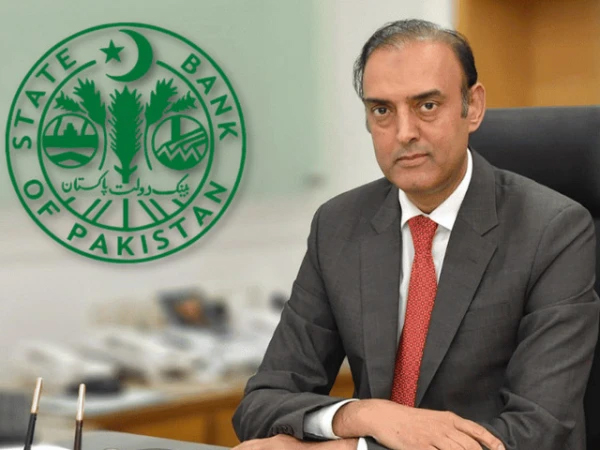
Islamabad (Qudrat Daily) — Governor State Bank of Pakistan, Jameel Ahmad, has inaugurated the “Pasban Remit Tennis Reward” scheme.
This market-based reward scheme has been launched under the auspices of the Pakistan Banks’ Association (PBA), the representative platform of the banking industry.


Under the scheme, customers who send their remittances to Pakistan through banking channels will be given cash prizes totaling Rs16 billion annually in recognition of their services. All expenses of the scheme will be borne by the banking industry and it will not place any burden on the national exchequer.
The scheme, formed under the patronage of the State Bank, aims to further encourage overseas Pakistanis to use formal banking channels when sending remittances to their loved ones in Pakistan.
Addressing the inaugural ceremony, Governor Jameel Ahmad said that the State Bank and the government had been working with the PBA for the past few months on preparing this scheme.
He said the scheme will operate on a market basis under self-reliance so as to facilitate overseas Pakistanis in sending their remittances home through formal banking channels, encourage them, and thereby secure remittances.
He said workers’ remittances are the primary source of income for millions of families across Pakistan. These remittances meet their household expenses, provide access to education and health facilities, and provide resources for investment and economic opportunities.
The Governor State Bank also mentioned the stability coming to the country’s external account. He said the external current account deficit had reached an unsustainable level in FY22, causing foreign exchange reserves to decline rapidly; this deficit has now been brought to a manageable level, which has helped in continuously increasing foreign exchange reserves.
The State Bank’s foreign exchange reserves, which had fallen to $3.0 billion in February 2023, now stand at $21.4 billion.
He emphasized that the continuous strengthening of foreign exchange reserves is due to the purchase of foreign exchange from the market rather than external borrowing, unlike in the past. The Governor praised the services of overseas Pakistanis and highlighted the extraordinary performance of workers’ remittances, which reached a record level of $41.6 billion in FY26, compared to $21.7 billion in FY19, showing an increase of nearly double over this period.
Governor Jameel Ahmad stressed that these figures do not merely show improvement in key indicators, but also reflect hard-earned stability and resilience, which can help end boom-and-bust cycles and put the Pakistani economy on a sustainable path of growth.
He said the government and the State Bank have taken several policy and reform measures to bring about this change. To promote exports, the government has given tax incentives in this year’s budget, while the State Bank, in collaboration with stakeholders, has created targeted long-term financing and performance-based refinance schemes.
The scope of the Roshan Digital Account (RDA) has also been expanded so that, in addition to overseas Pakistanis, foreign investors and Pakistani residents holding declared foreign assets can also get investment opportunities through RDA.
The State Bank has also taken steps to increase access, including recently holding an awareness session in the United Kingdom. Moreover, IT companies and freelancers have been facilitated in opening foreign currency accounts and retaining export earnings in these accounts.
The Governor further said that the government has introduced incentive schemes over the past years to encourage the use of formal channels for sending remittances into the country. These schemes have helped in market development, bringing more financial institutions into the ecosystem, expanding Pakistan’s domestic and global reach, and strengthening the infrastructure required to process the growing volume of remittances.
Due to market development and the rising cost of these schemes, the government and the State Bank, in close collaboration with the banking industry, planned a more sustainable, market-based model and carried out a gradual transition to it.
Jameel Ahmad, while appreciating the banking industry’s continued cooperation in strengthening formal channels of remittances, said that introducing Pasban is another step in the direction of this transition.
Acknowledging the important role of overseas Pakistanis in Pakistan’s economy, he said this step will help maintain the attractiveness of formal channels. The Governor also appreciated the Pakistan Banks’ Association and the banking industry’s partnership in designing and launching the scheme.
Briefing participants on the scheme, PBA CEO and Secretary General, Munir Kamal, said that the Pasban scheme is the latest effort in a series of coordinated measures by the State Bank, the government, and the banking industry to support the external sector.
He said the scheme has been designed by banks on the basis of the remitter’s bank, and the amount the banking industry is to spend for the full year starting July 2026 to make remittance receipt free has already reached approximately Rs100 billion.
He further said that this year banks have voluntarily reduced the markup on Export Refinance Facility (ERF) for new loans and refinancing by 3.0 points to 4.50 percent, which is within the ERF limit of Rs1,052 billion. This will strengthen the government’s economic growth agenda through exports, as well as banks’ export and import loans to promote exports of the SME sector.
Munir Kamal informed participants about the key features of the scheme. He said that a remittance recipient who receives $100 or more per month in his bank account for three consecutive months in a single quarter will be eligible to participate in the scheme.
A recipient of remittances equivalent to $100 will be issued a digital, non-transferable entry number (ticket), provided he receives the said volume of remittances for three consecutive months. For example, if a recipient receives the equivalent of $100 each month for three consecutive months, he will receive three quarterly entry numbers.
Recipients of larger remittances will receive additional entry numbers in proportion to the amount received. For example, if a recipient receives $100 in October, $200 in November, and $300 in December, he will receive 1, 2, and 3 entry numbers respectively, thus accumulating six entries during the quarter.
A total of 2,521 cash prizes will be awarded each quarter, with a total value of Rs4 billion:
First prize: one prize of Rs10 crore
Second prize: 20 prizes of Rs2.5 crore
Third prize: 100 prizes of Rs1 crore
Fourth prize: 2,400 prizes of Rs1 million
Under this scheme, annual prizes of Rs16 billion will be distributed among more than 10,000 lucky winners. To ensure broader distribution of prizes, prizes will be allocated to regions with higher remittances, including 50 percent for the Gulf Cooperation Council (GCC), 15 percent for the United Kingdom, 15 percent for Europe, 10 percent for North America, and 10 percent for other countries. The first prize will be available to remittance recipients from all regions.
The draw will be quarterly; the first draw will be held on January 15, 2027, and will include eligible remittances received during the second quarter of FY26, i.e., from October 1, 2026, to December 31, 2026.
The draw will be conducted through a secure, fully digital, and auditable procedure.
Participation in this scheme is completely free. No bank will charge remittance recipients any fee for participating in the scheme, nor will it require any payment, ticket purchase, minimum balance, or any other consideration.
In this regard, PBA Chairman Zafar Masud said: “Pakistan’s banks have continuously played their role by taking on the responsibility of Rs80 billion in incentives for remittance senders, reducing export refinance rates for exporters, bringing lending to the private sector, agricultural sector, and small and medium enterprises (SMEs) to record levels, and assisting in resolving circular debt.
Overseas Pakistanis are an equally important part of this story; the Pasban scheme, launched in collaboration with the State Bank and the government, recognizes their role.”