Oil Tanker Association Fined Rs60 Million for Cartelization
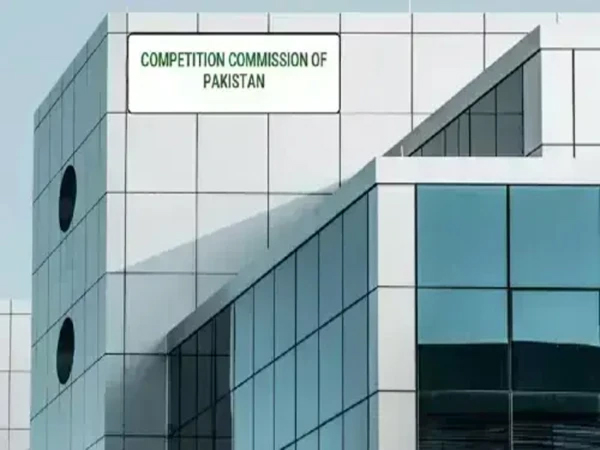
ISLAMABAD: The Competition Commission of Pakistan (CCP) has found the All Pakistan Edible Oil Tanker Owners Association involved in cartelization and imposed a total fine of Rs60 million for collectively fixing transportation rates and allocating business among tanker operators through a token-and-turn system.
According to the CCP’s market intelligence findings, the association was fined Rs30 million for collective determination of freight rates and another Rs30 million for allocating business through the “parchi” (token) and “bari” (turn) system. The commission has also ordered the immediate discontinuation of both practices.

The CCP found that the association had adopted a formula under which a Re1 increase in diesel prices resulted in a 0.75 percent increase in transportation charges, while a Re1 decrease in diesel prices led to only a 0.5 percent reduction. Thus, for an identical change in diesel prices, the rate of increase in freight charges was 50 percent higher than the rate of decrease.
Over a period of six years, transportation rates were collectively revised 89 times, including 52 increases and 37 decreases, according to the commission.
The CCP said tanker owners offering discounted freight rates were threatened with blacklisting, while mills seeking discounted rates were allegedly threatened with suspension of edible oil supplies. Business was allocated to tankers through the token-and-turn system instead of through free competition. A separate penalty of Rs500,000 was prescribed for both the tanker and its owner for violating specified conditions.
Despite the issuance of a show-cause notice, the association issued a new freight-rate circular in August 2026 covering 81 destinations. The circular fixed freight rates for transporting ghee from Karachi to 81 locations outside the city, while rates were also set for transporting fat to 53 destinations outside Karachi and ghee and fat to 18 locations within Karachi.
According to the CCP, approximately 2,362 tankers and 1,700 owners were registered with the association. Between 250 and 300 association-affiliated tankers arrived at the ports daily, compared with 50 to 60 National Logistics Corporation (NLC) tankers. In comparison with two major market players, the association accounted for approximately 83 percent of the market share.
The commission said there was an agreement between the Oil Tanker Owners Association and the Pakistan Vanaspati Manufacturers Association (PVMA) for determining transportation charges. Representatives of the tanker association also acknowledged that freight rates were fixed through a mutual agreement.
The transportation-rate agreement was initially reached in 2011 and updated in 2022, the CCP said. During a search, the commission seized six years of rate circulars, the agreement and records stored on computers.
The CCP noted that a previous commission decision had also found agreements between PVMA and oil tanker associations for determining transportation charges. In that case, PVMA was fined Rs50 million for violating Section 4 of the Competition Act through price fixing.
The CCP warned that rising transportation costs could further increase the prices of essential commodities such as ghee and edible oil, potentially making them less affordable for consumers.
The commission reiterated its order for the immediate termination of collective freight-rate fixing and the token-and-turn system.