State Bank of Pakistan Keeps Policy Rate Unchanged at 11.50%
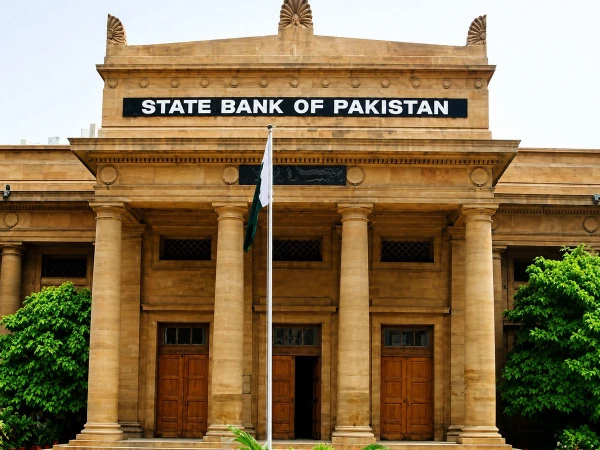
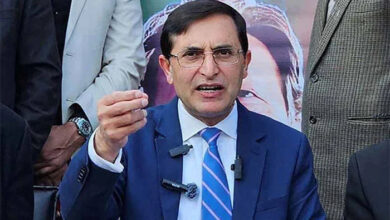
KARACHI: The State Bank of Pakistan (SBP) has decided to keep its benchmark policy interest rate unchanged at 11.50% following a meeting of the Monetary Policy Committee (MPC) chaired by Governor Jameel Ahmad.
Announcing the decision at a press conference, the SBP governor said the committee reviewed inflation trends, key economic indicators, and the potential impact of ongoing geopolitical tensions in the Middle East before deciding to maintain the current policy rate.

Jameel Ahmad noted that inflation eased gradually during the first six months of the fiscal year, with average inflation standing at 5.5% from July to February, in line with the lower end of the central bank’s target range.
However, he said renewed tensions in the Middle East led to higher global prices of petroleum products, food commodities, and shipping costs, pushing inflation up to 11.7% in May and 11.1% in June.
The governor expressed optimism that inflation would decline in July and ease more significantly after September, with average inflation projected to remain around 7% during the current fiscal year.
He said Pakistan’s domestic economic indicators remain encouraging, although global geopolitical developments continue to influence inflation. Rising wheat prices also contributed to recent inflationary pressures, but the overall outlook is expected to improve by the end of the year.
The SBP governor stated that Pakistan’s current account deficit stood at only $139 million in the previous fiscal year and is projected to remain between 0% and 1% of GDP this year, depending partly on developments in the Middle East.
He highlighted continued growth in workers’ remittances, which reached $41.6 billion last fiscal year and are expected to increase to $44 billion this year, helping contain the external deficit.
Ahmad acknowledged that exports remained under pressure during the previous fiscal year but said they are expected to recover gradually due to government support measures, improved performance in the IT sector, and stronger food exports. While imports also increased, improved external financial inflows helped meet the country’s financing needs.
The governor said Pakistan’s foreign exchange reserves had reached $20.2 billion by the end of December and are expected to remain around that level over the coming year, with the possibility of further improvement.
He added that Pakistan successfully managed external debt repayments during the previous fiscal year through rollovers and refinancing arrangements, while foreign exchange reserves still increased by $5 billion. This fiscal year, the country is expected to repay $21.5 billion in external debt, including approximately $3.5 billion in interest payments and $17 billion in principal.
According to the governor, a substantial portion of these obligations is expected to be rolled over by friendly countries, reducing the amount of principal that Pakistan will need to repay directly.
Ahmad also said the country’s external debt servicing costs have declined as short-term, high-interest loans have been replaced with longer-term financing at lower interest rates. He noted that Pakistan’s sovereign credit rating has improved, enabling the country to borrow internationally at significantly lower yields than in previous years.
The governor added that Pakistan’s foreign exchange reserves have increased substantially, the country’s risk profile has improved, and lower interest costs have generated savings of nearly Rs2 trillion for the government.
Despite global uncertainty and inflationary pressures, he said Pakistan’s economy remains on a stable path. GDP growth reached 3.7% in the previous fiscal year, up from 3.2% a year earlier, while growth for the current fiscal year is projected to range between 3.5% and 4.5%, supported by improving industrial performance and an expected recovery in agriculture, provided there are no severe climate-related disruptions.
The SBP also confirmed that it has maintained the policy rate at 11.50% since April 27, and the latest decision extends that stance for the coming policy period.