Minbar of the Prophet: A Sacred Landmark of History and Spirituality in Madinah
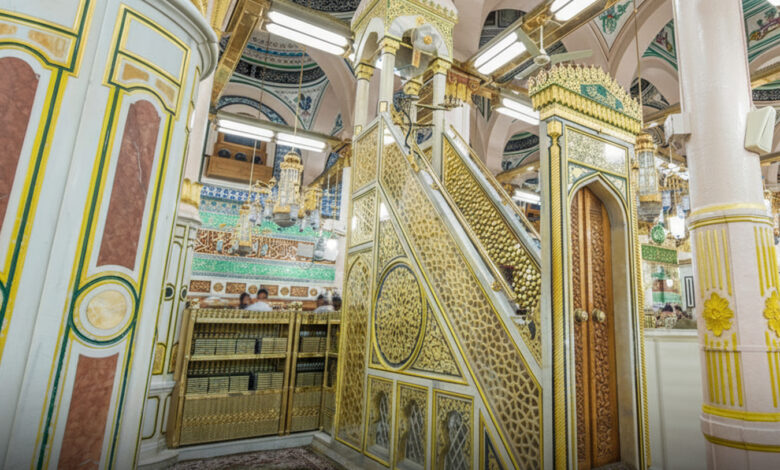
Madinah: The Minbar (pulpit) of the Prophet Muhammad (peace be upon him) at Al-Masjid an-Nabawi stands as a deeply significant site, embodying both historical heritage and spiritual importance for millions of Muslims worldwide.
Installed in the eighth year after Hijrah, the Minbar was introduced to accommodate the growing number of worshippers, enabling them to see and hear the Prophet more clearly during sermons.


According to historical accounts, the original structure was made of tamarisk wood and consisted of three steps. It was later replaced with wood from date palm trunks—the same type of tree from which the Prophet had previously delivered sermons.
The Minbar holds immense religious significance and is referenced in several traditions. One روایت attributes the Prophet as saying that the space between his home and the Minbar is akin to a garden from Paradise.
The present-day Minbar is located on the western side of the Rawdah area within the mosque and stands approximately five meters tall. It features inscriptions of the Shahada at its entrance, a wooden door with two panels, and is surrounded by a metal railing adorned with gold plating.
These features highlight the continuous care and preservation of sacred sites within the mosque, ensuring their historical integrity and allowing future generations to benefit from their spiritual and cultural legacy.