Rising Tensions in Yemen: Saudi Arabia and UAE at Odds Over Strategy and Interests
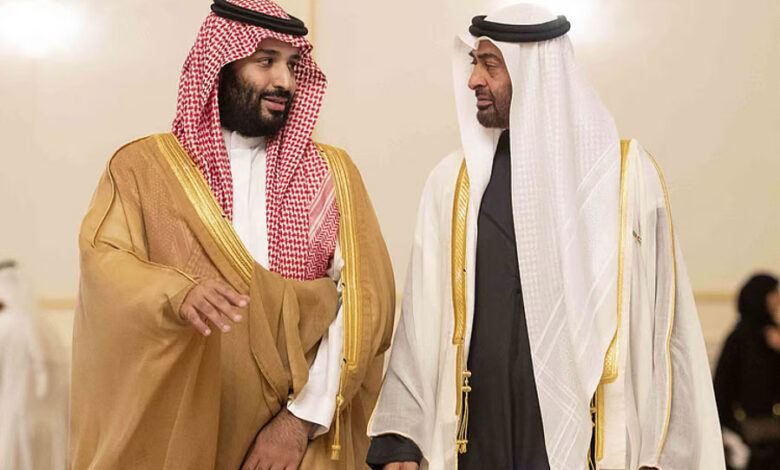
**Islamabad:** The ongoing conflict in Yemen has once again stirred regional politics, revealing sharp differences between Saudi Arabia and the United Arab Emirates (UAE) over the future of the war-torn country.
Saudi Arabia has demanded that the UAE withdraw its forces from Yemen within 24 hours, in line with the request of Yemen’s internationally recognized government. Riyadh also called on the UAE to immediately halt any military or financial support to any Yemeni faction. Previously, Yemen’s President Rashad Al-Alimi announced the termination of the joint defense agreement with the UAE, ordering all Emirati forces to leave the country within 24 hours. Additionally, he declared a 72-hour complete blockade of all ports and land and sea crossings.


In response, the UAE expressed deep disappointment at Saudi Arabia’s statement and rejected all allegations regarding its involvement in Yemen. The UAE clarified that the ships anchored at Mukalla Port were not carrying weapons, and the cargo was intended solely for Emirati forces deployed in Yemen.
While Saudi Arabia and the UAE previously operated as allies against the Houthi rebels, their strategic priorities have diverged in recent months. Saudi Arabia favors a unified, central Yemeni government and has emphasized ceasefire agreements and political solutions with the Houthis. Its goal is to secure its border and exit the conflict honorably.
Conversely, the UAE has focused on southern Yemen, supporting the Southern Transitional Council (STC) to pursue greater autonomy or even secession. This divergence has intensified disagreements, as Saudi leadership opposes any division of Yemen. The UAE’s involvement is largely driven by strategic security concerns, particularly regarding the Arabian Sea and Bab al-Mandeb Strait.
The Yemeni government faces pressure from both sides: while it relies on Saudi backing, southern forces strengthened by UAE support challenge its authority. Analysts warn that if these differences persist, the Yemen crisis could become even more complex, potentially reshaping diplomatic and military alignments in the region.
The conflict traces back to 2011, when popular uprisings in the Arab world, later dubbed the Arab Spring, escalated political unrest in Yemen. By 2014, Houthi rebels had seized the capital, Sana’a, and declared governance across the country, prompting intervention by the Saudi-UAE-led coalition in 2015. Since then, the focus of military and political efforts has shifted, with Saudi Arabia emphasizing negotiations with the Houthis and the UAE strengthening its influence in southern Yemen.
Experts note that despite being allies, Saudi Arabia and the UAE now pursue divergent objectives regarding Yemen’s future, heightening the risk of further regional instability.