Drought Threat Looms Over Balochistan as Rainfall Shortage Deepens, Groundwater Levels Drop Rapidly
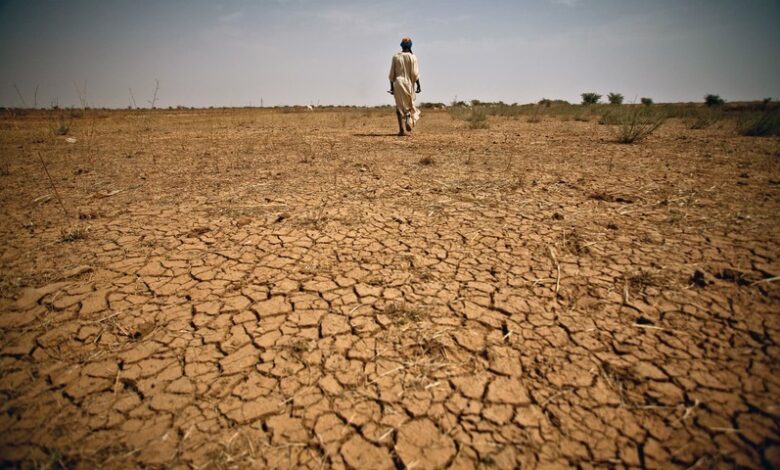
Quetta: Signs of **drought** have become increasingly evident across several districts of **Balochistan** due to a prolonged **lack of rainfall**. The continued absence of rain has caused a **sharp decline in groundwater levels**, leading to severe shortages of **drinking water** and affecting both **agriculture** and **livestock** sectors.
Owing to the impacts of **climate change**, districts such as **Quetta, Chagai, Kharan, Washuk, Panjgur, Kech, and Gwadar** have experienced either no rainfall or far below-normal levels this year.

According to a report by the **Pakistan Meteorological Department (PMD)**, between **January 21 and September 30**, no rainfall was recorded for **253 days in Jiwani**, **214 days in Dalbandin**, **202 days in Nokundi**, and **173 days in Panjgur**.
**Muhammad Afzal**, Deputy Director of PMD Balochistan, stated that the province’s **western belt — from Zhob to Gwadar — has received significantly below-average rainfall**, with persistent dry conditions in **Rakhshan Division, Makran Division, and Quetta** over the past six months.
Due to the falling groundwater table, residents of affected areas are now facing **acute water shortages** for domestic and agricultural use, while **shortages of water and fodder for livestock** have exacerbated environmental and livelihood challenges.
**Ibrahim Baloch**, Director General of the **Environmental Protection Agency (EPA)**, said the effects of climate change are clearly visible. “In some regions, excessive rainfall causes floods, while in others, the absence of rain brings drought. Artificial rain may be necessary in drought-hit areas, and a plan for this is currently under consideration,” he revealed.
The Meteorological Department has further warned that **no significant rainfall is expected in Balochistan’s drought-affected districts during November and December**. Experts have urged immediate action to **conserve water resources**, **prevent wastage**, and implement **long-term afforestation and water management plans** to mitigate the worsening situation.