Four Supreme Court Judges Object to Rules Approved via Circulation, Boycott Full Court Meeting
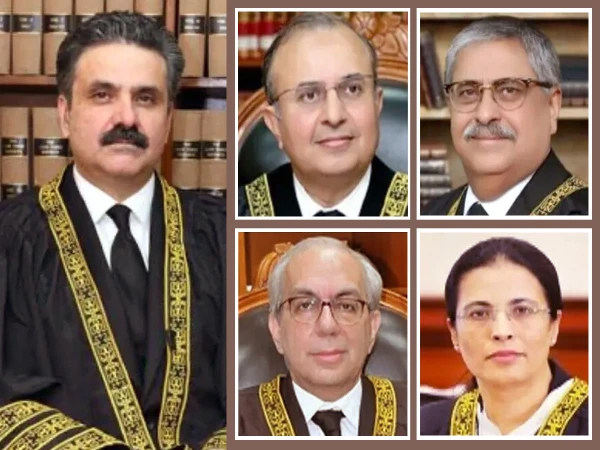
Islamabad: Four judges of the Supreme Court of Pakistan have written a letter to Chief Justice Yahya Afridi expressing strong reservations over the approval of the **Supreme Court Rules 2025 through circulation** instead of collective consultation. The judges also refused to attend the Full Court meeting convened to discuss the matter.
According to *Express News*, the letter stated that the rules were notified without collective input. The judges questioned why, if the rules did not require approval through a Full Court, a meeting was being called now to validate amendments. “Calling a Full Court after approving rules through circulation is like giving legal cover to an unconstitutional act,” the judges wrote, demanding their letter be included in the meeting’s minutes and made public.


The letter was signed by **Justice Mansoor Ali Shah, Justice Munib Akhtar, Justice Ayesha Malik, and Justice Athar Minallah**. Copies were also circulated among all Supreme Court judges and the Registrar.
The judges emphasized that **public trust is the foundation of the judiciary**, and only open debate can strengthen it. They argued that circulation is meant for minor administrative matters, not constitutional rules. “The Chief Justice alone could not approve such substantive and procedural rules through circulation. Without Full Court approval, the rules are unconstitutional,” the letter read.
The judges highlighted contradictions in the working paper, noting that although the rules were notified on **August 9** and communicated to judges on **August 12**, further amendments were still being sought. They described this as an attempt to retroactively legitimize an unlawful act.
“Full Court meetings should not be reduced to mere symbolic endorsements. The proper constitutional path is to place the complete rules before the Full Court for open debate and approval,” the judges insisted, calling the current meeting “pointless” and refusing to participate.
They concluded by urging that **minutes of Full Court meetings be made public**, stressing that transparency is the bedrock of judicial legitimacy and public confidence.