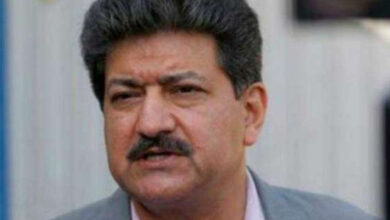
Energy Minister Owais Laghari Highlights Key Reforms in Electricity Tariffs and Subsidies

Islamabad:Energy Minister Owais Laghari has provided new insights into the significant increase in electricity consumers and the government’s efforts to reduce electricity prices for domestic users. During a session of the National Assembly, Laghari revealed that the number of consumers using less than 200 units has surged from around 60 to 70 million to approximately 183 million.
He elaborated that the government continues to provide significant subsidies, particularly to low-consumption users. “Around 18.5 million consumers receive a subsidy of 90% on electricity consumption of 0 to 100 units, while 70% of a subsidy is given on 100 to 200 units,” he explained.

The Energy Minister further clarified that, despite the increase in consumer numbers, the price per unit for those consuming fewer than 200 units has been significantly reduced. He noted that the electricity prices for consumers of 200 units or fewer have been reduced by 60% over the past nine months.
He pointed out that in June 2024, the government had to collect a cross-subsidy of Rs 255 billion from the industrial sector, but this has now decreased to Rs 94 billion. The overall electricity tariff, including taxes, has been reduced from Rs 48.7 per unit to Rs 38.4 per unit.
Owais Laghari emphasized that the government has managed to lower the burden of cross-subsidies on domestic consumers while also reducing electricity prices overall. He also mentioned that the tariffs for protected consumers were cut by approximately 58%, and the rates for non-protected consumers have seen a reduction of 11 to 17% depending on their consumption slabs.
Additionally, Laghari noted that the government has decided not to purchase any more electricity from external sources, reflecting the current self-sufficiency in the energy sector with an excess of around 7,000 MW of available electricity.
The reforms in the energy sector reflect the government’s efforts to provide relief to domestic consumers while managing the financial burden on the state’s power sector.