Claim of Reviving Extinct Dire Wolves Sparks Debate in Scientific Community
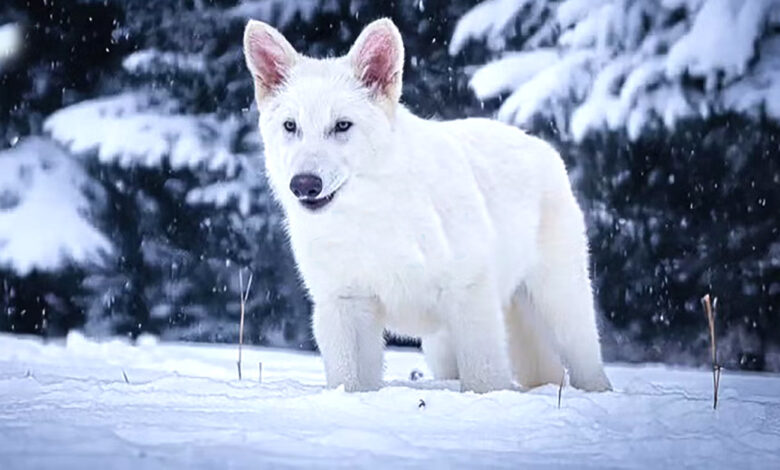
Islamabad: A captivating image of a snow-white wolf on the cover of Time Magazine has sent waves across social media, with the claim that “Dire Wolves” have been brought back to life through advanced genetic engineering. This feat, allegedly achieved by the renowned biotechnology company Colossal Biosciences, claims that they have successfully bred three dire wolf pups—Romulus, Remus, and Khaleshi—by using ancient DNA and modern genetic modification techniques.
However, the scientific community has expressed skepticism regarding these claims. Experts argue that these pups are not purebred dire wolves, but rather genetically modified common gray wolves, altered to resemble their extinct counterparts. Dr. Philip Seden, a zoologist at the University of Otago in New Zealand, clarified that these wolves are hybrid animals, not the true, extinct dire wolves.
Dire wolves, known as fearsome hunters during the Ice Age approximately 10,000 years ago, gained significant popularity among the public thanks to fictional works like Game of Thrones. However, paleogeneticist Dr. Nick Rollins pointed out that fully resurrecting the dire wolf is an impossible task due to the severe degradation of its original DNA. He likened ancient DNA to a substance that has been subjected to extreme heat, rendering it nearly impossible to reconstruct.
Colossal Biosciences has claimed that they are also working on reviving other extinct animals such as the woolly mammoth and the Tasmanian tiger. Yet, experts caution that reintroducing these extinct species could pose significant risks to the natural ecosystem. They warn that if we don’t fully understand the consequences of such actions, we may fail to appreciate the intricacies of nature’s original design.
While this breakthrough is undoubtedly a milestone in the field of science, experts stress that the so-called “resurrection” of the dire wolf is far from reality. These creatures may be genetically modified hybrids, but they are not true replicas of nature’s original creation.