Early Market Closure Cuts Pakistan’s Economic Activity by Rs100 Billion Weekly
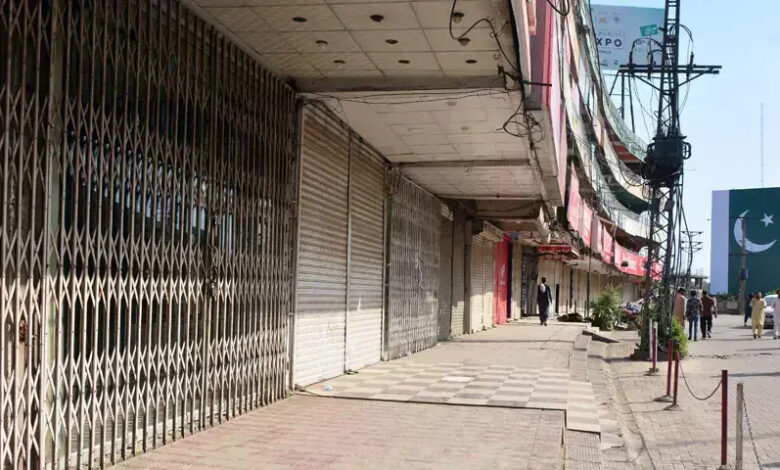
Karachi: Pakistan’s decision to close retail markets between 8 PM and 9 PM is reportedly causing a significant economic slowdown, with nearly Rs100 billion in documented weekly economic activity being affected.
According to details, the restriction has led to a 25% to 30% decline in sales across the formal retail sector, which includes more than 35,000 shops nationwide. The policy has also resulted in reduced incomes for daily wage workers and layoffs of employees working in second shifts. Around 13,000 businesses linked to point-of-sale (POS) systems are also said to be at risk.
The government had introduced early closing hours to reduce electricity consumption, shift consumer activity to daytime, ease pressure on the power grid, and encourage earlier daily routines. However, industry representatives argue that overall consumption has not decreased.
Chairman of a chain-store association, Asfandyar Farooq, stated that consumer demand remains strong even after 7 PM, as most shoppers prefer evening hours for purchases. He added that informal markets and unregulated sectors continue operating late into the night, shifting a large portion of trade into the undocumented economy.
As a result, tax collections from sales tax and income tax, along with POS-based revenue, are reportedly declining. He further noted that energy savings remain limited, as restaurants, malls, and entertainment venues continue operating late, while more regulated retail outlets are forced to close early.
Farooq proposed extending retail operating hours to 10 PM, aligning timings across retail, restaurants, and entertainment sectors, and introducing daylight saving time. He claimed such measures could help improve energy efficiency and generate significant annual savings.
He also cited examples from countries such as Saudi Arabia, Türkiye, Indonesia, Malaysia, and Egypt, where shopping malls remain open until late evening, especially during peak seasons.
Meanwhile, analyst Rida Fatima of Sherman Securities estimated that inflation could rise to 10.2% in April, compared to 7.3% in the previous month. She projected an average consumer price index of 6.1% for the first ten months of the fiscal year and a monthly inflation increase of 1.8%.