Punjab Sets Target of One Million Animals for Meat Export, Expands Livestock Support Programs
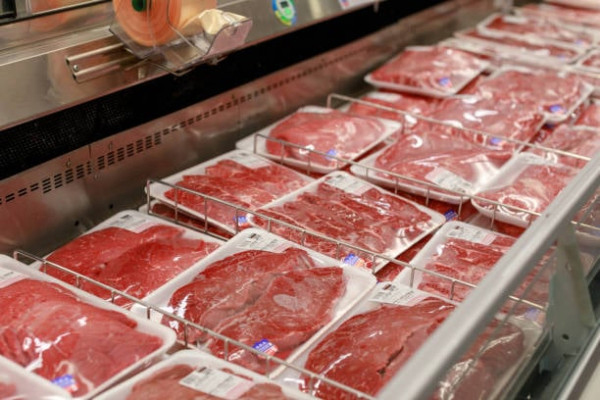
Lahore: The Punjab government has set an ambitious target to export one million animals as part of a major push to boost the province’s meat export sector.
The decision was taken during a special meeting chaired by Chief Minister Maryam Nawaz Sharif via video link, where key initiatives related to the livestock sector were approved.
Officials informed the meeting that memorandums of understanding (MoUs) have been signed with seven organizations, including a Chinese company, to promote meat exports from Punjab. A global meat company from China is expected to install a boiler unit in collaboration with PAMCO, aimed at preparing boiled meat for large-scale export.
According to the briefing, companies will import meat from 300,000 export-ready animals, while fattening targets have been set for 300,000 buffaloes and cows, and 300,000 rams. Additionally, one million goats and sheep will be raised for export purposes.
The government also plans to establish state-of-the-art veterinary hospitals in every tehsil, along with four mobile veterinary dispensaries per tehsil to provide doorstep animal healthcare services to farmers.
In a significant move to support rural communities, Chief Minister Maryam Nawaz Sharif announced that the quota for providing free livestock to rural women has been doubled. So far, 9,255 animals have been distributed among widowed and divorced women in 12 districts of South Punjab.
To meet export goals, authorities plan to tag two million animals and provide subsidized semen to two million farms to improve breeding.
Provincial Livestock Minister Ashiq Hussain Kirmani said that for the first time, the livestock farming sector in Punjab will be mechanized, with up to 60 percent subsidy on machinery. Equipment such as milk chillers, feed mixers, weighing scales, and other tools will be provided to modernize farming practices.
Officials also noted that no cases of hemorrhagic septicemia or lumpy skin disease have been reported in livestock since 2022, even after recent floods. Imported vaccines for lumpy skin disease are available at Rs300, while locally produced vaccines cost only Rs30.
Speaking on the occasion, the chief minister said that neglecting the livestock sector in the past was unfortunate, adding that livestock farming has the potential to play a key role in achieving economic self-reliance.