Israel Faces Diplomatic Setback in Europe as Risk of Sanctions Grows: The Guardian
Washington: Israel has suffered a significant diplomatic setback in Europe over the past week, with growing discussions around potential sanctions, according to a report by The Guardian.
The developments come after key political shifts in Europe, including the removal of Israeli ally Hungarian Prime Minister Viktor Orbán from power and Italy’s decision to suspend an important defence cooperation agreement with Israel.

These changes are being viewed as potentially paving the way for long-delayed European Union sanctions against violent Israeli settlers in the occupied West Bank. They may also increase pressure on the EU to reassess its broader relationship with Israel amid the ongoing war in Gaza and regional tensions.
Experts on Israel–Europe relations suggest that Hungary’s previous veto had been the main obstacle blocking such sanctions. With a new Hungarian government expected soon, EU officials are reportedly preparing to revisit the issue of targeted sanctions as a priority.
Officials within the European Union say the matter of sanctions against extremist settlers is likely to be reconsidered next month. Countries such as Ireland, Spain, and Slovenia—seen as more supportive of the Palestinian position—are also pushing for discussions on Israel’s human rights obligations at the upcoming EU foreign ministers’ meeting.
In a joint letter to the EU foreign policy chief, these countries expressed concern over what they described as an “unbearable” situation in Gaza and rising violence against Palestinians in the West Bank, warning that the EU can no longer remain silent.
While sanctions on settlers are largely considered symbolic, analysts say their approval could open the door to broader measures, including partial suspension of trade agreements with Israel.
The European Union is Israel’s largest trading partner and a major source of tourism and research funding, but it has so far struggled to convert its economic influence into effective political pressure.
In Brussels, discussions are intensifying over how to increase leverage on Israel, with officials warning that if the situation does not improve, stronger measures could follow.
Separately, more than 390 former European ministers, diplomats, and senior officials have called for a partial or full suspension of EU agreements with Israel. A public petition on the issue has also reportedly gathered over one million signatures.
However, any suspension of key agreements would require support from major EU members such as Germany or Italy, making consensus difficult. Previous attempts to impose trade-related measures failed to secure sufficient backing.
Diplomatic sources also suggest that possible negotiations between Israel and Lebanon could delay immediate EU action, as several member states prefer not to disrupt fragile diplomatic processes.
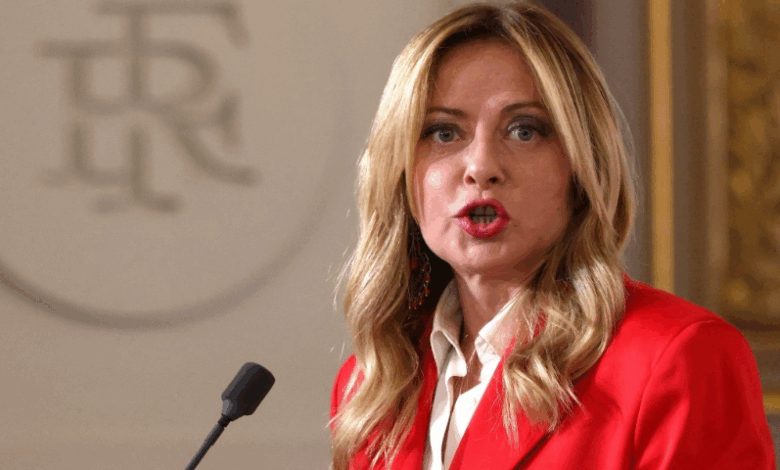
Italy’s suspension of a defence cooperation deal is being seen as a significant political signal. Prime Minister Giorgia Meloni, once considered a strong supporter of Israel, is reportedly facing increasing domestic pressure amid growing public support for Palestine.
Analysts say foreign policy has become a key domestic issue in Italy as the economic and geopolitical effects of Middle East conflicts increasingly reach Europe.
While the defence agreement suspension is considered largely symbolic, European diplomats say it sends a clear message to Israel.
The report also highlights growing debate within Europe over what is seen as a “double standard” in applying sanctions on Russia but not on Israel, a factor some argue is damaging the EU’s global credibility.
In Germany, public opinion is also shifting, with many citizens increasingly critical of Israeli policies, although the government maintains a cautious stance due to historical responsibilities.
Experts conclude that Israel’s relationship with Europe is entering a new phase, where political pressure and policy shifts could significantly shape future ties, especially given the EU’s role as Israel’s largest economic partner.