Supreme Court: High Court Must Investigate Before Issuing Harsh Remarks on Junior Judges
"Judges Can Make Mistakes, Malice Must Be Proven"
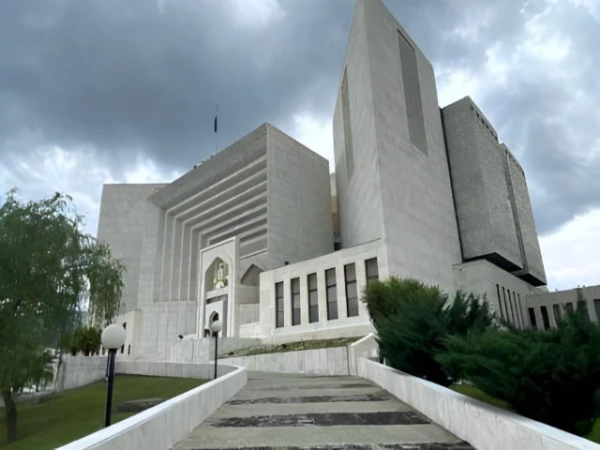
Islamabad: In a recent ruling, the Supreme Court of Pakistan has emphasized that the High Court must conduct proper investigations and exercise caution before passing harsh remarks about junior judges. The court’s decision came in a case involving the remarks and verdicts of the Sindh High Court regarding Zakir Hussain, the administrative judge of the Anti-Terrorism Court in Karachi.
The Supreme Court, in its judgment, stated that High Court judges should refrain from making strong remarks against junior judges without conducting thorough investigations and ensuring fairness. The ruling, written by Justice Muhammad Mazhar, was issued after a 3-judge bench heard the case.
The issue arose when the Sindh High Court annulled two judicial orders by Zakir Hussain, who had made decisions related to judicial custody and the formation of a Joint Investigation Team (JIT). The High Court had also objected to the presence of Hussain’s father in the judge’s chamber, labeling it as bad faith. Furthermore, the Sindh High Court recommended the withdrawal of Hussain’s administrative powers.
The administrative judge then approached the Supreme Court, challenging the High Court’s remarks and decision. The Supreme Court dismissed the harsh comments made by the High Court about the junior judge. However, the court noted that Hussain’s administrative position was not reinstated since a new judge had already been appointed. The Sindh government had removed his administrative powers on February 26, 2025.
The Supreme Court also pointed out that the junior judge was not given an opportunity to clarify his position before such severe accusations were made. It stressed that before expressing strong opinions about junior judges, the High Court should provide them with a fair hearing. Such comments, the Court added, have long-lasting effects on a judge’s career.
The Court further noted that judicial remarks, if published in newspapers or recorded in decisions, become part of the permanent record. These accusations should be communicated to the Chief Justice of the High Court through a confidential report, it said. The Court emphasized that courts should guide junior judges, not criticize them, and failure to allow the petitioner a chance to defend himself violated Article 10-A of the Constitution.
The ruling concluded that harsh remarks based on verbal accusations are unacceptable, as they tarnish the judiciary’s image and public trust. It reminded that judges, like any other individuals, are prone to mistakes, and proving malice is essential before passing judgment.