Iran Eyes Chinese “Chengdu J-10C” Fighter Jets Following Air Force Failure
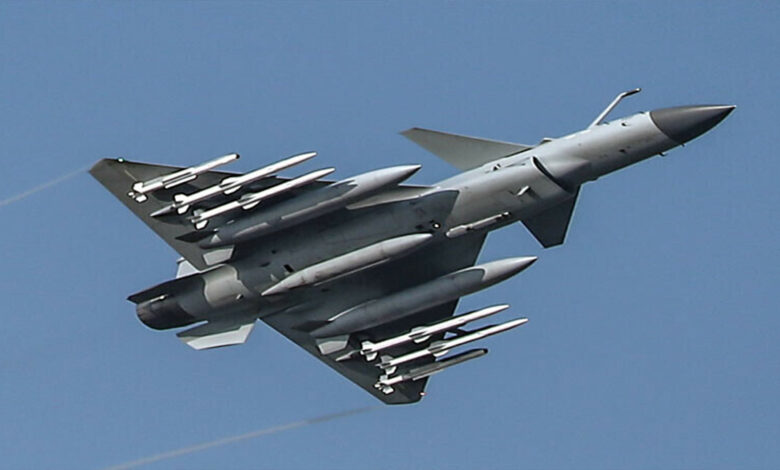
Last month, when dozens of Israeli and American warplanes breached Iranian airspace and carried out heavy bombing raids, Iran’s Air Force remained entirely inactive. Despite the aggressive incursion, the Iranian Air Force made no attempt to intercept the incoming aircraft, nor did it deploy any of its fighter jets into the skies. Following this failure, Iran has reportedly accelerated negotiations with China to purchase the advanced *Chengdu J-10C* fighter jets, according to Iranian and Ukrainian media reports.
Currently, Iran’s Air Force operates approximately 150 fighter jets, most of which are outdated models purchased before the 1979 Islamic Revolution, including American F-4 Phantoms, F-5 Tigers, and F-14 Tomcats. In addition, a few Soviet-era MiG-29s are part of Iran’s aerial fleet, but many of these jets are either obsolete or grounded due to insufficient maintenance.


After the collapse of a deal with Russia for modern Sukhoi Su-35 fighter jets, Tehran has turned to China for the *J-10C*. According to reports, Iran was originally set to receive 50 Su-35 jets from Russia, but the agreement has only seen the delivery of four training aircraft so far, with the rest of the deal remaining stalled.
The *J-10C*, known as the “Vigorous Dragon” in China, is a 4.5-generation, multi-role fighter equipped with advanced AESA radar and PL-15 missiles. These jets are capable of striking enemy targets at long distances and are considered effective against some of Israel’s more modern aircraft. Interestingly, the *J-10C* was also successfully used by the Pakistan Air Force during the May 2025 skirmish with India.
It is noteworthy that Iran attempted to purchase *J-10* jets as early as 2015, with a potential deal for 150 aircraft on the table. However, the deal fell through due to China’s demand for foreign currency payments and the United Nations arms embargo, with Iran offering oil and gas payments instead.
The *J-10C* fighter jets, which are also part of Pakistan’s air force, are equipped with the PL-15 missile, a system superior to Western missiles. Their design, combined with the WS-10 Chinese engine and delta wing canard configuration, gives them enhanced maneuverability and superior performance in dogfights.
While Iranian official sources have yet to confirm or deny the deal, if finalized, it could not only mark a major shift in Iran’s air capabilities but also significantly enhance Sino-Iranian defense relations. This is especially important as Russia appears hesitant to supply Iran with critical weaponry.
Analysts believe that Iran’s pivot towards Chinese defense technology is a response to the recent airstrike failure, which exposed serious military vulnerabilities and raised questions about the balance of power in the region. In this context, Iran’s shift to China’s defense industry is seen as a practical and strategic move to bolster its military capabilities amid increasing regional and global pressures.