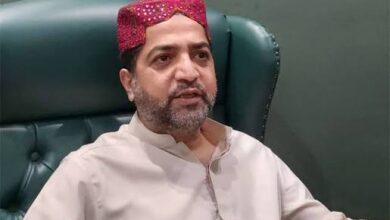
Zubaida Jalal Opposes Demolition of Balochistan Assembly Building, Calls for Museum or Digital Library Conversion

Quetta (Daily Qudrat): Senior political and social leader and former federal minister Zubaida Jalal has strongly opposed any move to demolish the Balochistan Assembly building, stating that the structure is not merely an office building but a symbol of Baloch society and identity.
In a statement issued on Sunday, she said the foundation of the assembly was laid in the 1970s by then Prime Minister Zulfikar Ali Bhutto and Governor Nawab Akbar Khan Bugti, while it was inaugurated by Nawab Bugti after the 1988 elections.
She added that the architectural design of the assembly hall reflects traditional Balochi “Gadan” style, making it an important cultural landmark rather than just a governmental facility. “This is not an empty building; it represents the identity of Baloch society,” she said.
Zubaida Jalal expressed surprise over recent reports suggesting its possible demolition, stating that the building is neither extremely old nor structurally dilapidated to justify such a decision. She also pointed out that even in Sindh, the old assembly building built before the creation of Pakistan was preserved and not demolished after a new building was constructed.
She questioned the rationale behind targeting the Balochistan Assembly building, noting that even older structures such as the Parliament House still exist. She stressed that instead of demolishing it, the building should be preserved and repurposed.
The former minister proposed that the assembly building be converted into a museum or a library. She suggested the establishment of a museum similar to the Quaid-e-Azam Museum in Lahore or a digital library modeled on the Jinnah Library, so that youth of Balochistan could connect with global researchers and academic resources.
She emphasized that preserving historical buildings is essential for cultural continuity and educational development, urging authorities to reconsider any demolition plans and instead focus on preservation and innovation.