Unified Strategy Agreed for Skills Sector to Boost Pakistan’s Economic Growth at 5th NTCC Meeting
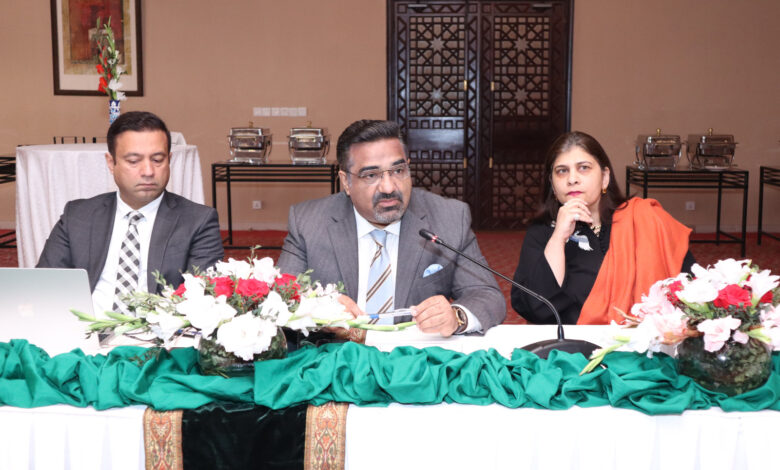
Islamabad (Daily Qudrat) – The National Vocational and Technical Training Commission (NAVTTC) convened the fifth meeting of the National TVET Coordination Committee (NTCC) in Islamabad, where stakeholders agreed on a strong and unified roadmap for the country’s skills development sector to drive economic growth.
The high-level meeting brought together representatives from provincial TEVTAs, relevant ministries, overseas employment promoters, and the private sector to ensure strategic alignment and practical measures in the skills ecosystem.


Chairperson NAVTTC, Ms. Gulmina Bilal Ahmed, inaugurated the session, describing Technical and Vocational Education and Training (TVET) as a key driver of Pakistan’s economic progress. She reiterated the vision of building a skills ecosystem that is internationally recognized and fully aligned with global employment standards.
“We must shift from supply-driven models to demand-driven and outcome-based strategies,” she emphasized, highlighting NAVTTC’s first large-scale impact bond as a notable example of public-private partnership and measurable social impact. She also stressed that inclusive growth is not only a social necessity but an economic imperative, appreciating the successful inclusion of women, transgender persons, widows, and orphans in skills programs.
Looking toward the 2036 national targets, she underscored the importance of partnerships with international institutions in emerging sectors such as critical minerals, ensuring adherence to global standards to prepare Pakistan’s workforce for future opportunities.
Executive Director NAVTTC, Mr. Muhammad Aamir Jan, reinforced this vision, emphasizing the need to mobilize both public and private resources for sustainable development. He described the Prime Minister’s historic allocation of Rs10 billion for skill development as a clear reflection of the government’s commitment and stressed the effective and results-oriented utilization of these funds.
He also termed NAVTTC’s impact bond initiative—launched in collaboration with the Bank of Punjab, British Asian Trust, and the European Union—as a transformative model to attract private investment and scale social development projects.
The meeting witnessed broad national representation, including the Managing Director of the Overseas Employment Corporation and the Director General of the Bureau of Emigration and Overseas Employment, along with chairpersons and managing directors of all provincial TEVTAs. Senior officials from the Punjab Skills Development Authority, Punjab Vocational Training Council, and Punjab Skills Development Fund were also present.
Chairpersons of Technical Education and Trade Testing Boards from Punjab, Sindh, Khyber Pakhtunkhwa, Balochistan, and Azad Jammu & Kashmir attended the session. Representatives from the Overseas Employment Promoters Association, chambers of commerce and industry, National University of Technology (NUTECH), British Council, and GIZ also participated.
During the meeting, progress on decisions from the fourth NTCC session was reviewed, and key briefings were presented by NAVTTC, TEVTAs, and donor partners. A major development was the approval of a new sub-committee on international certifications to align Pakistani qualifications with global standards.
Additionally, data integration and evidence-based decision-making were prioritized, leading to the formation of a task force mandated to finalize the centralization of a National Skills Database within two months. This initiative is expected to significantly enhance planning, monitoring, and overall performance in the TVET sector.
The fifth NTCC meeting concluded with a renewed commitment from all stakeholders to collaborate in building a skilled, competent, and globally competitive Pakistani workforce.