Pakistan Assures IMF of Rs5 Additional Carbon Levy on Petroleum Products Under Climate Reform Agenda
*Islamabad (Qudrat Daily):*
The government has assured the International Monetary Fund (IMF) of implementing a 13-point reform agenda under climate financing, which includes the imposition of an additional Rs5 carbon levy on petrol and diesel.
According to official documents, key targets have been set through 2027 under the $1.3 billion Resilience and Sustainability Facility (RSF) program. Pakistan has committed to strengthening disaster risk financing to better cope with natural calamities. All major development projects will be required to undergo climate impact assessments, while projects costing more than Rs7.5 billion must mandatorily include climate impact evaluations.

The government has pledged that at least 30 percent of infrastructure project expenditures will be allocated to climate-related measures. A climate budgeting system will be introduced at both federal and provincial levels, with an annual climate budget report to be published.
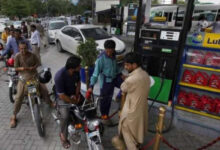
The additional Rs5 carbon levy on petrol and diesel is part of the agreed conditions. To promote clean transportation, subsidies will be provided for electric vehicles. By 2030, 30 percent of new vehicles are targeted to be electric, while 50 percent of motorcycles are planned to shift to electric power.
The Ministry of Finance stated that electricity subsidies will be restricted to deserving consumers only, while subsidies for affluent users will be phased out. The government has also assured the IMF of measures to reduce line losses and curb electricity theft.
Under the reforms, energy labeling will be made mandatory for refrigerators, fans, LED lights, motors, and air conditioners. By June 2027, the sale of energy-efficient appliances will be actively promoted. Future development projects will also be subject to compulsory climate impact assessments.
The document further states that service charges will be introduced for efficient water usage in Sindh, Khyber Pakhtunkhwa, and Balochistan, with plans to enhance revenue from provincial irrigation systems. A new water pricing adjustment mechanism will be introduced in Sindh and Punjab.
Additionally, annual climate budget reports will be issued, improved financial planning for climate-related disasters will be undertaken at federal and provincial levels, and banks will be required to assess climate-related financial risks as part of the broader reform framework.