Despite NFC Awards, 17 Balochistan Districts Ranked Among Pakistan’s Most Vulnerable Report Shows Acute Decline in Health, Education, Water Access and Housing
Quetta: A new report has revealed that despite receiving trillions of rupees in additional financial resources under the National Finance Commission (NFC) Awards, Balochistan and Khyber Pakhtunkhwa remain severely underdeveloped, while Punjab leads the country in human development indicators.
According to the *District Vulnerability Index for Pakistan*, 17 districts in Balochistan and two in Khyber Pakhtunkhwa are classified among the nation’s most vulnerable regions. No district from Punjab falls into this category. The report was launched in Islamabad by Finance Minister Muhammad Aurangzeb and Minister for Climate Change Senator Musadik Malik.


The report highlights that strict control of resources by provincial capitals is pushing a significant portion of the population into chronic underdevelopment. It also raises concerns over the utilisation of funds allocated under the Seventh NFC Award, noting that instead of public welfare, provinces are using these funds to service federal debts.
Among the 20 most vulnerable districts, 17 are in Balochistan, two in the former FATA region, and one in Sindh. In contrast, the “less vulnerable” category includes 13 districts from Punjab, four from Sindh, and two from Khyber Pakhtunkhwa—while no district from Balochistan appears in this category.
The five weakest-performing districts include four from Balochistan—Washuk, Khuzdar, Kohlu, and Zhob—and one from KP, Kohistan. Other highly vulnerable districts include Dera Bugti, Musakhel, Nasirabad, Sherani, Jhal Magsi, Chagai, Barkhan, Qila Saifullah, Awaran, Kharan, Harnai, Kalat, Panjgur, and Tharparkar.
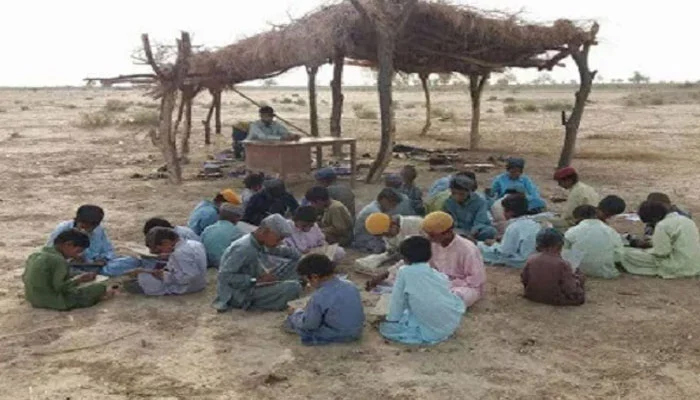
The report notes alarming living conditions: 65% of residents in the most vulnerable districts live in mud houses, 40% lack access to clean drinking water, and half the population does not have toilet facilities. Both Balochistan and KP rank lowest in access to healthcare, with severe disparities between districts.
Education indicators also paint a bleak picture, with Balochistan identified as the weakest province due to large distances to educational institutions.
Senator Musadik Malik highlighted that 11.3% of Pakistan’s population—around 10 million people—live in these 20 highly vulnerable districts, including two million adult women and an equal number of children under the age of five. He stressed that access to clean water, education, and safe housing are fundamental rights requiring immediate action.
The report further notes that prolonged terrorist violence, weak infrastructure—including poor roads, inadequate transport links, and limited telecommunication services—continue to impede development in Balochistan and KP.