Fresh Dates Healthier Than Dried Ones: Lower Sugar, Fewer Calories, and More Antioxidants, Experts Say
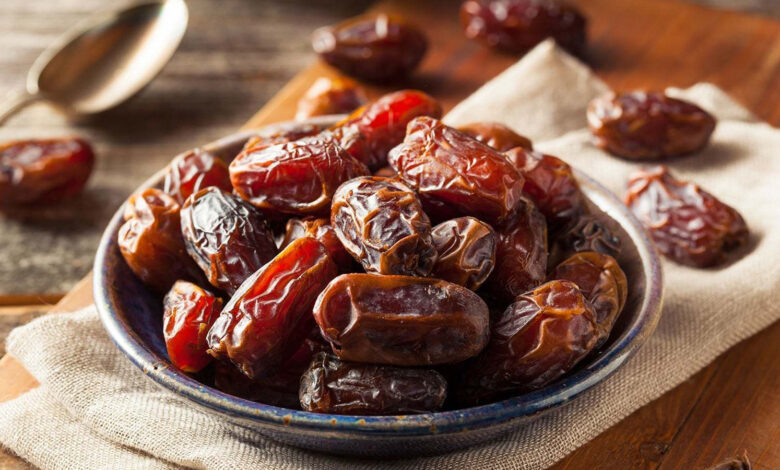
Karachi (Qudrat Daily): While dried dates are available all year round and are known as a nutrient-rich and fiber-packed snack, **fresh dates offer lower sugar, fewer calories, and higher antioxidant levels**, according to health experts and research published by *Verywell Health*.
Both fresh and dried dates contain essential vitamins and minerals, but they differ slightly in their nutritional composition. **Fresh dates contain moderate amounts of potassium and magnesium**, while **dried dates provide higher levels of calcium, potassium, and other micronutrients**.


Lower Sugar and Calories
Natalie Allen, a registered dietitian and assistant professor of nutrition at **Missouri State University**, explained that **fresh dates have a higher water content**, making them lower in calories and sugar compared to dried ones. Allen added that while **dried dates are more calorie-dense**, they serve as a **convenient source of quick energy** available year-round.
According to **Professor John Salz Black** from **Boston University**, fresh dates contain about **60% water**, while dried dates have only **around 25%**. The higher water content in fresh dates helps with **satiety**—making you feel full more quickly—whereas dried dates, being denser and sweeter, can be easier to overconsume.
Fiber, Minerals, and Vitamins
Both fresh and dried dates are rich in minerals, but the **drying process concentrates nutrients**. As a result, dried dates contain **more sugar, calories, fiber, calcium, and potassium** than fresh ones. Some studies show that **dried dates have over twice the fiber content** of fresh dates and slightly higher amounts of **fat and protein**.
However, the same drying process **reduces the levels of vitamins and antioxidants**. Fresh dates retain **higher amounts of vitamins B, C, A, and K**, many of which are lost during exposure to sunlight and heat in the drying stage.
Taste and Texture
Though both varieties are sweet, **fresh dates are soft, moist, and juicy**, often described as having a **rich, caramel-like flavor**. In contrast, **dried dates are firmer, chewier, and more intensely sweet**, with a **toffee-like taste** due to their concentrated sugar content.
Experts conclude that both forms of dates have nutritional benefits—**fresh dates are better for lower sugar intake and antioxidants**, while **dried dates offer more fiber and minerals**, making each suitable for different dietary needs.