Supreme Court Rules Judges Cannot Take Action Against Fellow Judges
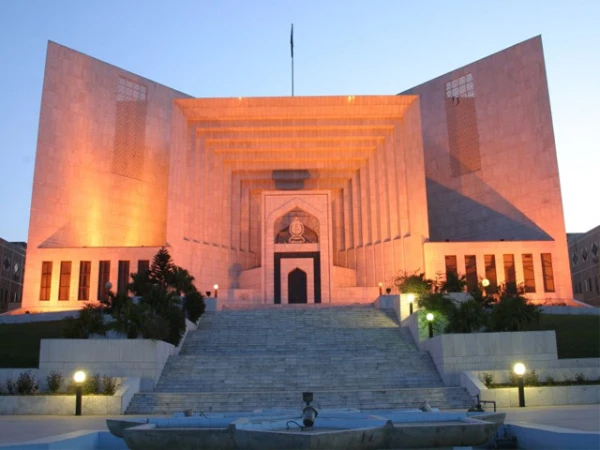
Islamabad: The Supreme Court of Pakistan has ruled that judges of the higher judiciary cannot initiate contempt proceedings or any other legal action against their fellow judges, reaffirming that all judges hold equal status and authority within their respective courts.
The verdict was announced in the intra-court appeal case of former Additional Registrar Nazar Abbas. Justice Jamal Mandokhail authored the 11-page decision, emphasizing that under **Article 5(2)**, every citizen is bound by the Constitution, and that judicial proceedings must strictly adhere to constitutional provisions.


The ruling clarified that neither the Supreme Court nor a High Court judge is answerable before another judge of the same court. Any action against a superior court judge can only be taken by the **Supreme Judicial Council** under **Article 209**. The court stressed that the contempt of court law was never intended to allow one judge to prosecute another.
The judgment highlighted that allowing judges to initiate contempt actions against their colleagues would undermine mutual respect, create internal conflicts, and damage the judiciary’s integrity. It warned that such practices could lead to “anarchy” and the collapse of the justice system.
The court also recalled the landmark *Justice (R) Iftikhar Hussain Chaudhry & others* case, where contempt notices were issued to judges who took oath under the Provisional Constitutional Order (PCO) in 2007, violating a restraining order. The 2009 ruling held that those who took oath under the unconstitutional PCO had ceased to remain judges.
Reiterating that judges are bound by their oath, code of conduct, law, and court rules, the decision stated: *“No judge or bench has the authority to direct the registry or any committee to fix a case that does not fall within its jurisdiction. If each judge starts hearing cases of their choice, it would disrupt judicial discipline and erode public trust.”*
The court concluded that in a democratic state, the judiciary remains the guardian of the rule of law, and maintaining harmony and equality among judges is essential for smooth judicial functioning.