Supreme Court Rules: Judges Cannot Issue Orders Against Fellow Judges of Same Court
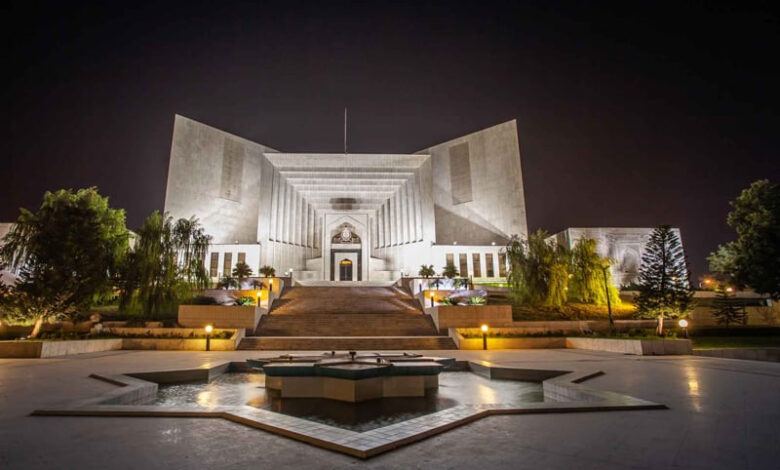
Islamabad: The Supreme Court of Pakistan has ruled that **a judge cannot issue orders against another judge of the same court**, emphasizing that disciplinary proceedings against superior court judges fall exclusively under the jurisdiction of the **Supreme Judicial Council (SJC)**.
The detailed judgment, authored by **Justice Jamal Khan Mandokhail**, was released in connection with an intra-court appeal filed by a former deputy registrar in a contempt of court case.


The verdict clarified that:
* **Contempt notices** issued against members of the Practice and Procedure Committee or Constitutional Bench Committee cannot be sustained.
* Under **Article 199**, judges of the Supreme Court and High Courts enjoy immunity in administrative matters.
* Judges are protected from internal and external interference, and no judge of the same court can issue writs or initiate proceedings against another.
The court cited the *Muhammad Ikram Chaudhry case*, reaffirming that **superior judiciary judges cannot be subjected to such proceedings**, as the judiciary is a fundamental pillar ensuring rule of law in a democratic state.
The judgment further stated:
> “A Supreme Court or High Court judge is not answerable before a fellow judge of the same court. If one cannot issue writs against another judge, contempt proceedings are equally impermissible. Only the Supreme Judicial Council, under **Article 209**, has the authority to proceed against a judge.”
The case originated when a bench led by Justice Mansoor Ali Shah had initiated contempt proceedings after court directives were allegedly ignored. The former deputy registrar challenged the move through an intra-court appeal. A **six-member Supreme Court bench** had earlier quashed the contempt proceedings, and the latest detailed judgment reinforces that decision.
Would you like me to also prepare a **short legal analysis box** (key takeaways for lawyers & students) under the headline?