Federal Minister Ataullah Tarar Warns Indian Actions Could Destabilize Regional Peace, Criticizes Modi’s War Mentality
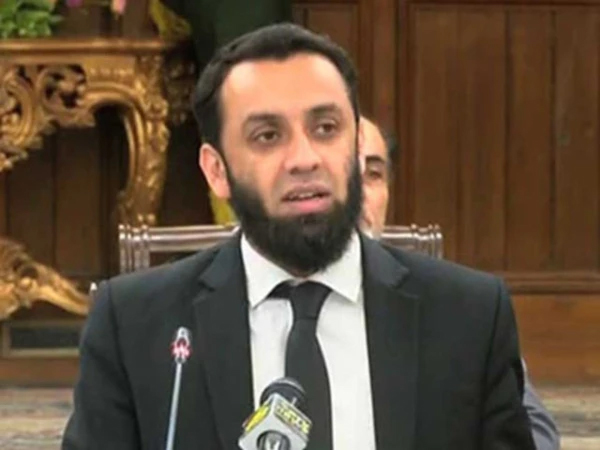
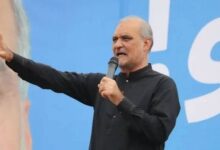
Islamabad: Federal Minister for Information, Ataullah Tarar, has expressed concerns over Indian Prime Minister Narendra Modi’s war-driven mindset, stating that India’s actions could potentially destroy regional peace. Addressing a policy dialogue on peace in South Asia, Tarar highlighted that India’s involvement in regional terrorism was evident, particularly in incidents like the Pahalgam attack.
Tarar pointed out that Pakistan, a victim of terrorism itself, had lost 90,000 lives in its fight against extremism and asked how a nation battling terrorism could be accused of perpetrating it in another country. He emphasized that Pakistan has made sacrifices to prevent terrorism globally and continues to bear the brunt of such attacks, making it illogical for Pakistan to be linked to any terrorist activities in India.
He also referenced Pakistan’s offer to conduct an investigation into the Pahalgam incident, but stated that India, driven by a war-like mentality, rejected it. Tarar also stressed that despite being proponents of peace, Pakistan ensured its peaceful intentions were not seen as weakness. He noted India’s attempts to use water as a weapon, questioning how a country could unilaterally terminate international agreements.
Tarar reaffirmed Pakistan’s desire for peace, especially concerning Kashmir, which he called an unresolved dispute, as acknowledged by former U.S. President Donald Trump. He reiterated Pakistan’s commitment to peace and its role as a peaceful nation in the international community.
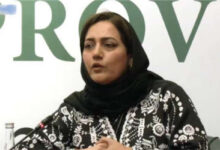
Earlier, during the policy dialogue organized by the Institute of Regional Studies and a private university, former Foreign Secretary Johar Saleem remarked that India had escalated its aggression in Jammu and Kashmir since August 2019. He emphasized that Pakistan’s foreign policy is centered on dialogue and negotiations, while India is aggravating tensions in the region.
Dr. Moeed Yusuf, former National Security Advisor, and Senator Mushahid Hussain Sayed also addressed the gathering. Senator Sayed noted that India’s recent miscalculations have led to losses on military, political, and diplomatic fronts. He acknowledged that U.S. President Donald Trump, who is against military conflicts, played a role in reducing tariffs with Pakistan and strengthening trade relations.
Sayed also pointed out the growing importance of China in the region and the emerging trilateral alliances involving Pakistan, Afghanistan, and China, as well as Pakistan, Bangladesh, and China. He mentioned the significant agreement on the rail network between Turkmenistan, Afghanistan, and Pakistan, positioning South Asia as an emerging power bloc.
In his concluding remarks, Sayed emphasized that India’s foreign policy is shaped by the ideologies of Modi and the RSS, and Pakistan must leverage its strategic position in these changing dynamics.