Supreme Court Upholds Transfer of Justice Sarfraz Dogar, Declares It Constitutional and Legal
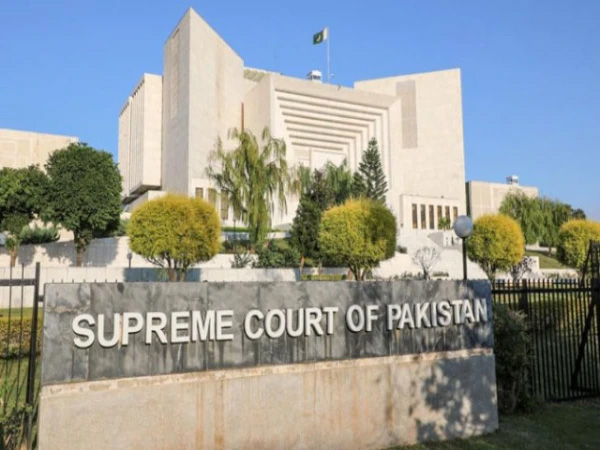
Islamabad: The Supreme Court of Pakistan has announced its reserved verdict in the high-profile judges’ transfer case, ruling that the transfer of Justice Sardar Sarfraz Dogar is in accordance with the Constitution and the law.
In a majority decision, the apex court upheld the transfer of all three Islamabad High Court judges, stating that such transfers do not amount to new appointments. The court remanded the matter of judges’ seniority back to the President of Pakistan, directing him to resolve the issue as soon as possible. Until then, Justice Sarfraz Dogar will continue as the Acting Chief Justice.
The judgment clarified that the President’s powers under Article 200 regarding judges’ transfers are not subject to any other law, and no statutory provision can override the constitutional mechanism provided in Article 200. It emphasized that a judge’s consent is essential for any transfer and that consultations with the Chief Justice of Pakistan and the relevant high courts are mandatory.
The court ruled that judicial independence is not compromised by such transfers and that the judiciary retains the discretion to accept or reject them. It further elaborated that the powers of the President under Article 200 are distinct and separate from those under Article 175-A, which governs judicial appointments via the Judicial Commission of Pakistan (JCP). Thus, a transfer under Article 200 cannot be considered a new appointment.
The verdict stated that transferring judges within the sanctioned strength of a high court is valid and does not require filling the post through the JCP. The court rejected the argument that any vacancy in the Islamabad High Court must be filled only through new appointments.
The majority opinion, authored by Justices Muhammad Ali Mazhar, Bilal Shahid Hasan, and Salahuddin Panhwar, stressed that Article 200 does not depend on or is subordinate to Article 175-A, and both provisions serve different constitutional purposes.
In contrast, dissenting opinions by Justices Naeem Akhtar Afghan and Shakeel Ahmed opposed the majority, arguing that the transfers should be nullified and termed them an encroachment on judicial independence. Justice Afghan read out the dissenting note and concluded with a verse:
“Daman pe koi chheet na khanjar pe koi daagh,
Tum qatl karo ho ke karamat karo ho.”
Earlier, during proceedings, lawyers including the PTI founder’s counsel, Idris Ashraf, argued there was a conflict between Articles 200 and 175-A and called for a harmonious interpretation. The Attorney General stated that there is no precedent for such transfers under Article 200, yet emphasized that the process involved consultation and the President and Prime Minister had limited roles.
The verdict concluded a legal battle that included 19 hearings since the petitions were filed in February. It involved challenges by five Islamabad High Court judges — including Justices Mohsin Akhtar Kayani, Babar Sattar, Tariq Jahangiri, Sardar Ijaz Ishaq, and Saman Rafat Imtiaz — as well as petitions from the PTI founder and the Karachi Bar Association.
The transferred judges were Justice Sarfraz Dogar, Justice Muhammad Asif, and Justice Khadim Hussain Soomro.