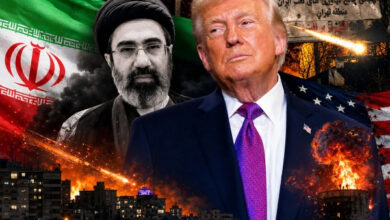
Trump Hosts Pakistan’s Army Chief in Historic Meeting; Talks Held on India-Pak Tensions and Iran-Israel Crisis
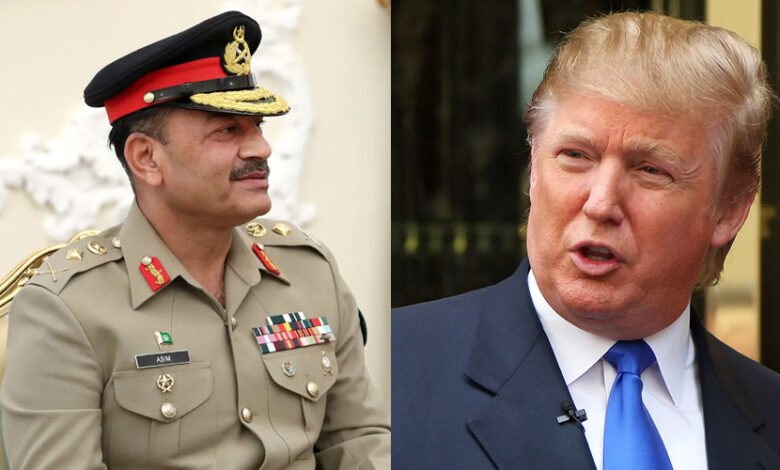
Washington, D.C.: In a landmark diplomatic development, U.S. President Donald Trump hosted Pakistan’s Chief of Army Staff, Field Marshal Syed Asim Munir, at the White House for a two-hour closed-door meeting followed by a formal luncheon in his honor — a gesture President Trump described as a “personal privilege.”
This marks the first time in U.S. history that a sitting American president has officially hosted a foreign army chief at the White House, signaling a shift in bilateral engagement between the two countries.
President Trump thanked Field Marshal Munir for his critical role in preventing an all-out war between India and Pakistan. “Meeting him today was an honor,” Trump said, adding that trade negotiations with both India and Pakistan are currently underway.
The two leaders also discussed the escalating conflict between Iran and Israel, with Trump confirming that both regional and global security matters were part of the dialogue.
Field Marshal Munir is also scheduled to meet U.S. Secretary of State Marco Rubio and Secretary of Defense Pete Hegseth during his ongoing visit to the United States.
Pakistan’s Defense Minister Khawaja Asif hailed the White House luncheon as a “historic milestone,” stating that it reflects a positive transformation in Pakistan-U.S. relations. “This is not just a diplomatic event, but a recognition of Pakistan’s growing strategic role,” he said, highlighting the possibility of Pakistan playing a constructive role in resolving the Iran-Israel conflict.
According to Khawaja Asif, the meeting was pre-planned before Field Marshal Munir’s visit began.
Former Foreign Minister and PPP Chairman Bilawal Bhutto Zardari also praised the development, calling it a “positive step” in strengthening ties between Islamabad and Washington. In a statement on X (formerly Twitter), he said, “Given the current president’s mediation role in regional conflicts, this engagement is highly significant.”
Meanwhile, following Pakistan’s decisive victory in a recent five-day conflict with India, New Delhi reportedly rejected U.S.-backed peace proposals. Pakistan, while asserting its preference for peace over war, reiterated that it would not be coerced into negotiations. “Peace is in the interest of both nations,” Bilawal stated, “but there is no military solution to our disputes.”
He further condemned India’s use of water as a strategic weapon, oppression in Kashmir, and the politicization of terrorism as unacceptable provocations.