Pakistan’s Economy Shows Signs of Stability as Fiscal Year 2023-24 Economic Survey is Presented
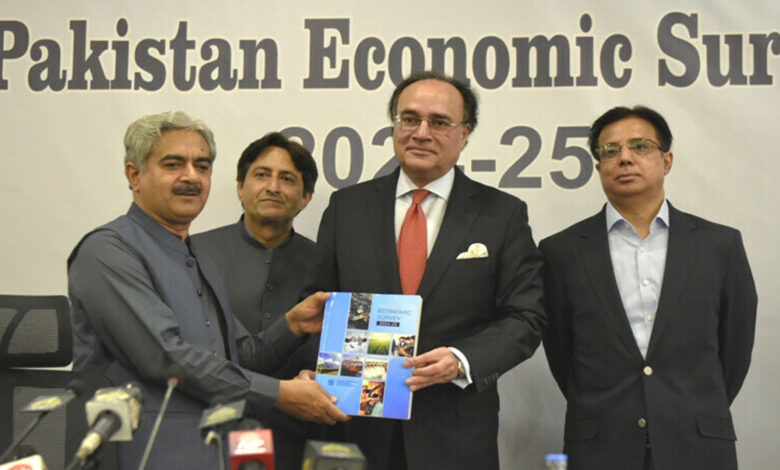
Islamabad, Pakistan:Federal Minister for Finance, Mohammad Aurangzeb, presented the Economic Survey for the fiscal year 2023-24, outlining several positive developments in Pakistan’s economy. Despite ongoing challenges, the government claims that the economy is heading towards stability, with inflation under control and structural reforms advancing steadily.
**Key Highlights:**
1. **Debt and Fiscal Management:**
* The government managed to save **800 billion rupees** in debt servicing costs.
* The government intends to avoid taking further loans, but if necessary, will do so on its own terms. The savings from debt payments will be redirected to key sectors.
* Significant steps are being taken to **right-size** 43 ministries and over 400 subordinate institutions to reduce costs and improve efficiency.
2. **Taxation and Revenue Growth:**
* Tax revenue has seen a **26% increase** in the first ten months of the fiscal year, and the number of registered taxpayers has doubled.
* The registration of retailers increased by **74%**, expanding the tax base significantly.
* **Non-tax revenue** surged by **69.9%**, reaching **4.23 trillion rupees**.
3. **IT and Freelancing Sector:**
* There has been a boost in **IT exports**, and **Pakistani freelancers** earned around **400 million USD**. This growth is seen as a positive indicator for Pakistan’s digital economy.
* **16,000 youth** are being trained in IT skills under various government programs to prepare them for both local and global job markets.
4. **Foreign Exchange and Remittances:**
* **Remittances** are expected to remain between **37 to 38 billion USD** this year, showing strong confidence in Pakistan’s economy by its diaspora.
* The **current account** balance has shifted from a deficit to a surplus, and the **primary balance** has turned positive for the first time in 20 years.
5. **Agriculture and Industrial Growth:**
* While the **agriculture sector** grew by only **0.6%**, the industrial sector showed a strong performance with a **6% growth**, services expanded by **2.9%**, and construction grew by **1.3%**.
* Major crops, such as cotton, faced a **30.7% decline** in production, which significantly impacted the agricultural output.
6. **Stock Market and Investment:**
* Investor confidence in the stock market has been restored, with the **stock market index rising by 52.6%**.
* **Exports** increased by **6.8%**, reaching a value of **27.3 billion USD**.
7. **Social Welfare and Public Support:**
* The budget for the **Benazir Income Support Program (BISP)** has been increased to **593 billion rupees**, benefiting **9.9 million families**.
* The **Skills Development Program** has provided training to over **56,000 youth** in various fields.
8. **Environmental Challenges:**
* The report also highlighted the impact of climate change, noting that Pakistan’s contribution to global greenhouse gas emissions is less than **1%**.
* The country suffered significant losses due to recent floods, which affected **33 million people** and caused an estimated **15 billion USD** in damages.
* **2024’s average temperature** was recorded at **23.52°C**, with rainfall exceeding the usual average by **31%**.
**Economic Outlook and Challenges:**
The survey acknowledges that while significant progress has been made, Pakistan’s economy faces ongoing challenges, including agricultural stagnation, political uncertainty, and external financial pressures. Despite the achievements in revenue generation and economic growth, the country still faces hurdles in meeting its fiscal targets.
Government officials have promised to continue with structural reforms and measures aimed at fiscal consolidation to ensure sustained economic growth in the coming years.
—
**Global Impact of Climate Change:**
The economic survey also draws attention to the environmental challenges Pakistan faces, with **natural disasters** and **climate change** continuing to threaten the country’s long-term economic stability.
—
**Responses to the Survey:**
The economic survey has sparked mixed reactions from economists and policymakers. While some praise the government’s efforts towards fiscal consolidation and revenue generation, others remain skeptical about the long-term impact of these measures, given the persistent challenges in the agricultural sector and external economic pressures.
گندم اگانے والوں کی پاور کوریڈورز میں کوئی لابی نہیں، اس لیے مریم نواز، انکی ٹیم بھی آ کر لٹارتی ہے۔ دوسری طرف شوگر ملز والوں کی نیٹ ورکنگ ہے، ہر موسم میں اربوں کماتے ہیں۔ کوئی وزیر انکے خلاف ایک لفظ نہیں بول سکتا ورنہ نوکری سے جائے گا۔ اور تو اور وزیراعظم کے مشیر ہارون اختر کہتے… https://t.co/6SD99jbaNb


— Majid Nizami (@majidsnizami) June 9, 2025
حکومت اپنے ٹارگٹ حاصل نہیں کرسکی مگر اسکے باوجود جو نمبرز ہیں وہ بھی مشکوک ہیں۔
صرف گندم میں 2200 ارب کا نقصان ایک سال میں ہوا۔ کپاس،مکئی،گنا سمیت کوئی فصل نہیں جس سے کسان کا فایدہ ہوا مگر حکومت نے اسکے باوجود زرعی ترقی کا مثبت قرار دیا ہوا ہے۔ https://t.co/8PVYSjKd9G pic.twitter.com/1DWYF3CBEC
— Muhammad Umair (@MohUmair87) June 9, 2025
قومی اقتصادی سروے
حکومت اپنے بیشتر اہداف حاصل کرنے میں ناکام، معاشی شرح نمو 3.6 فیصد ہدف کے مقابلے میں2.7 فیصد رہی، زرعی شعبے کی ترقی 2 فیصد ہدف کے مقابلے میں 0.6 فیصد رہی، خدمات شعبے کی ترقی 4.1 فیصد ہدف کے مقابلے 2.9 فیصد رہی۔ سرمایہ کاری کا ہدف بھی حاصل نہ ہوسکا۔— Muhammad Umair (@MohUmair87) June 8, 2025
پاکستان کے کسانوں کو اس سال صرف گندم میں دو ہزار دوسو ارب یعنی ٓآٹھ بلین ڈالر کا نقصان ہوا ہے اور یہ نقصان کسی قدرتی آفت کی وجہ سے نہیں بلکہ حکومتی پالیسیوں کی وجہ سے ہوا ہے۔ کروڑوں غریب ترین لوگوں مکمل تباہ ہو گئے ہیں۔ pic.twitter.com/vOj31Fuo8Z
— Zaigham Khan (@zaighamkhan) June 8, 2025